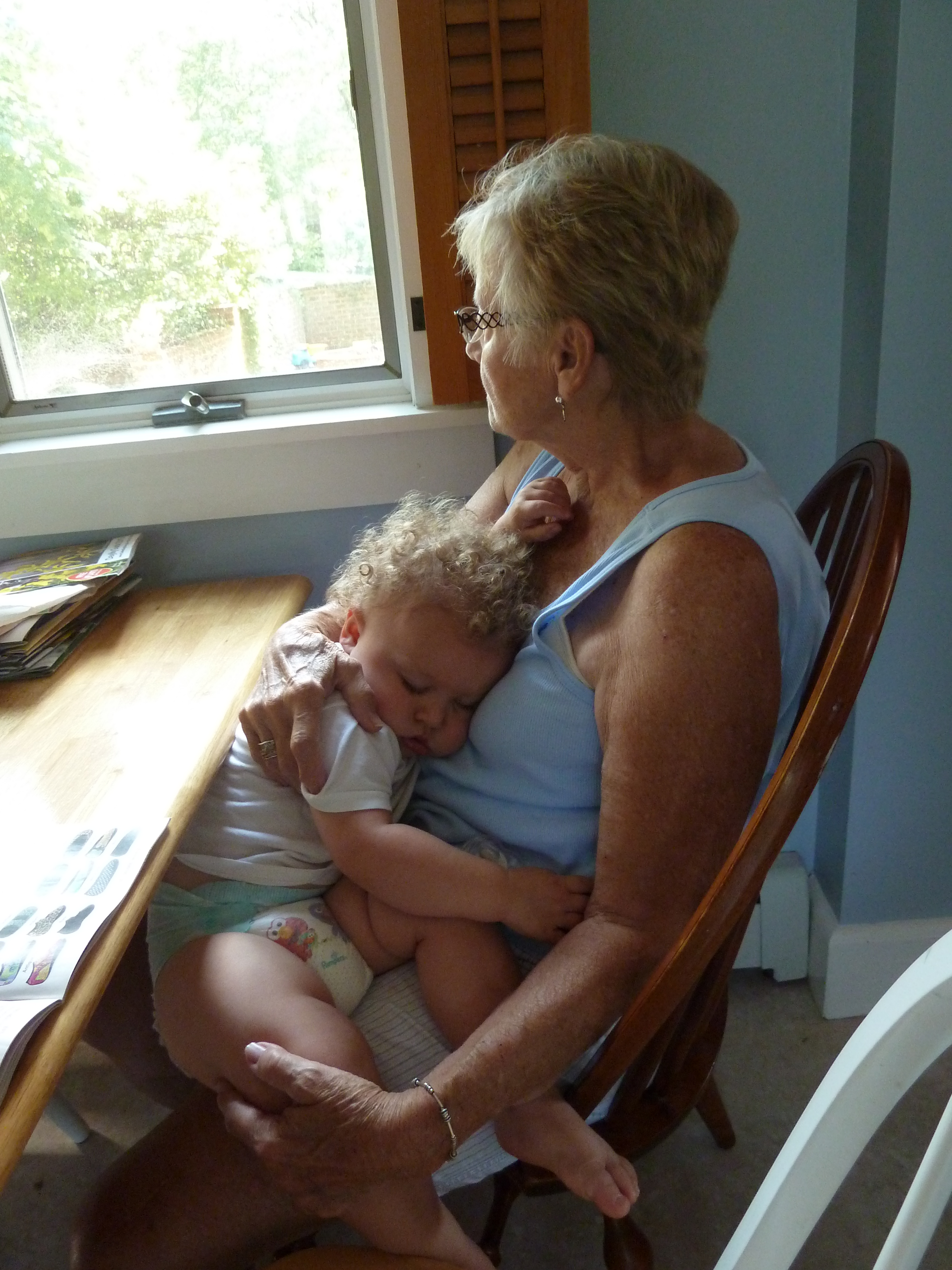
Last Week of Summer

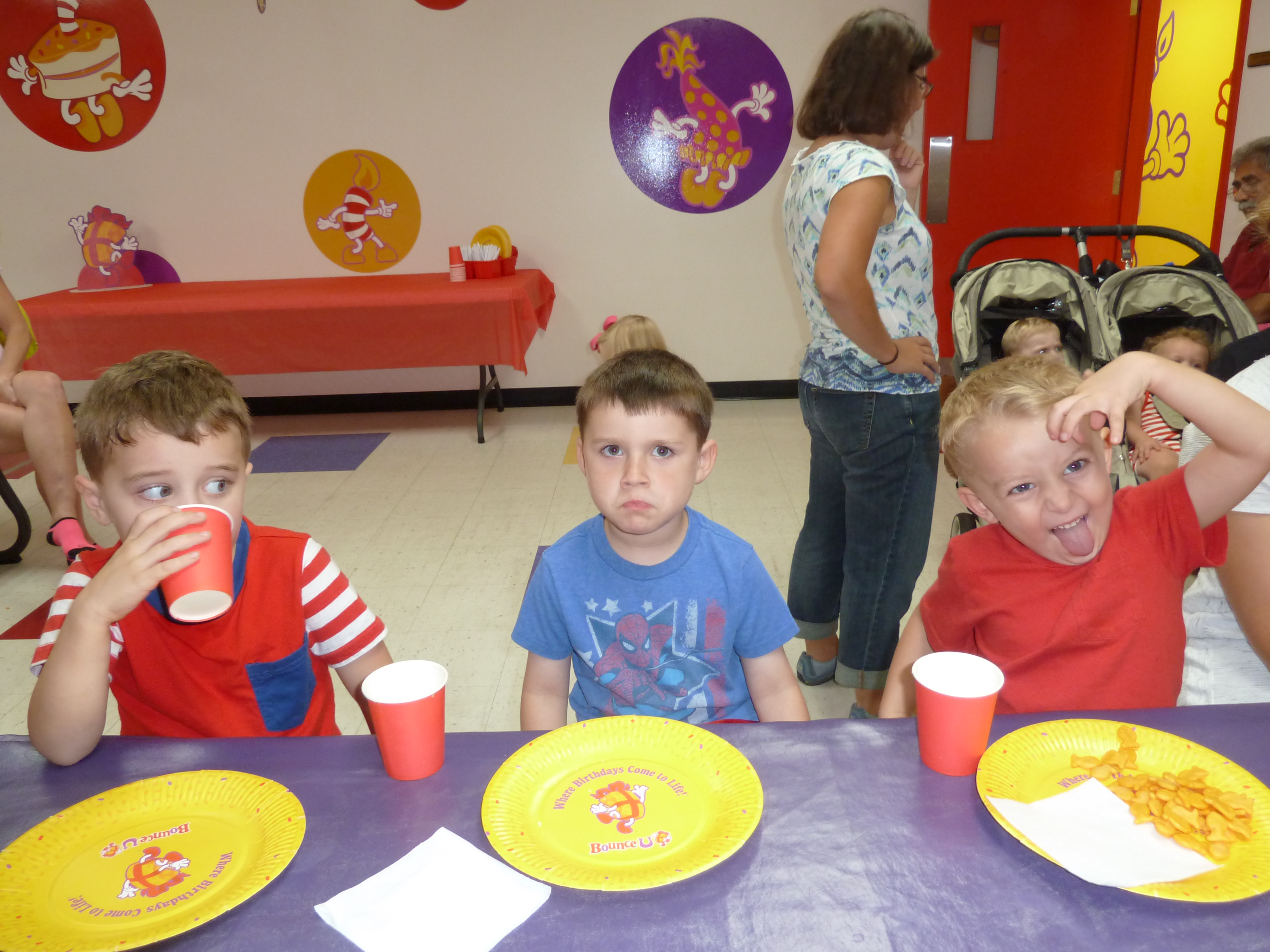
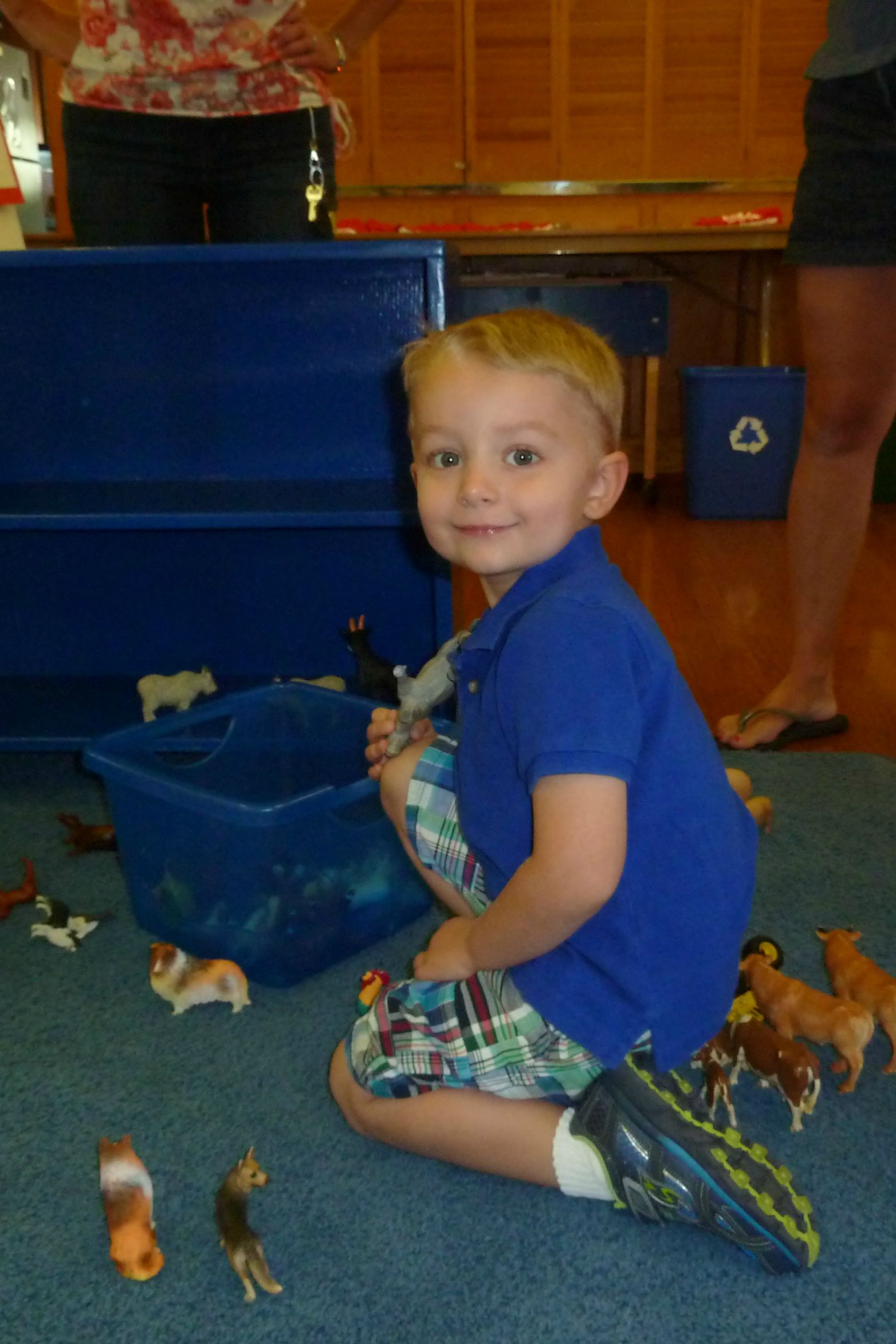
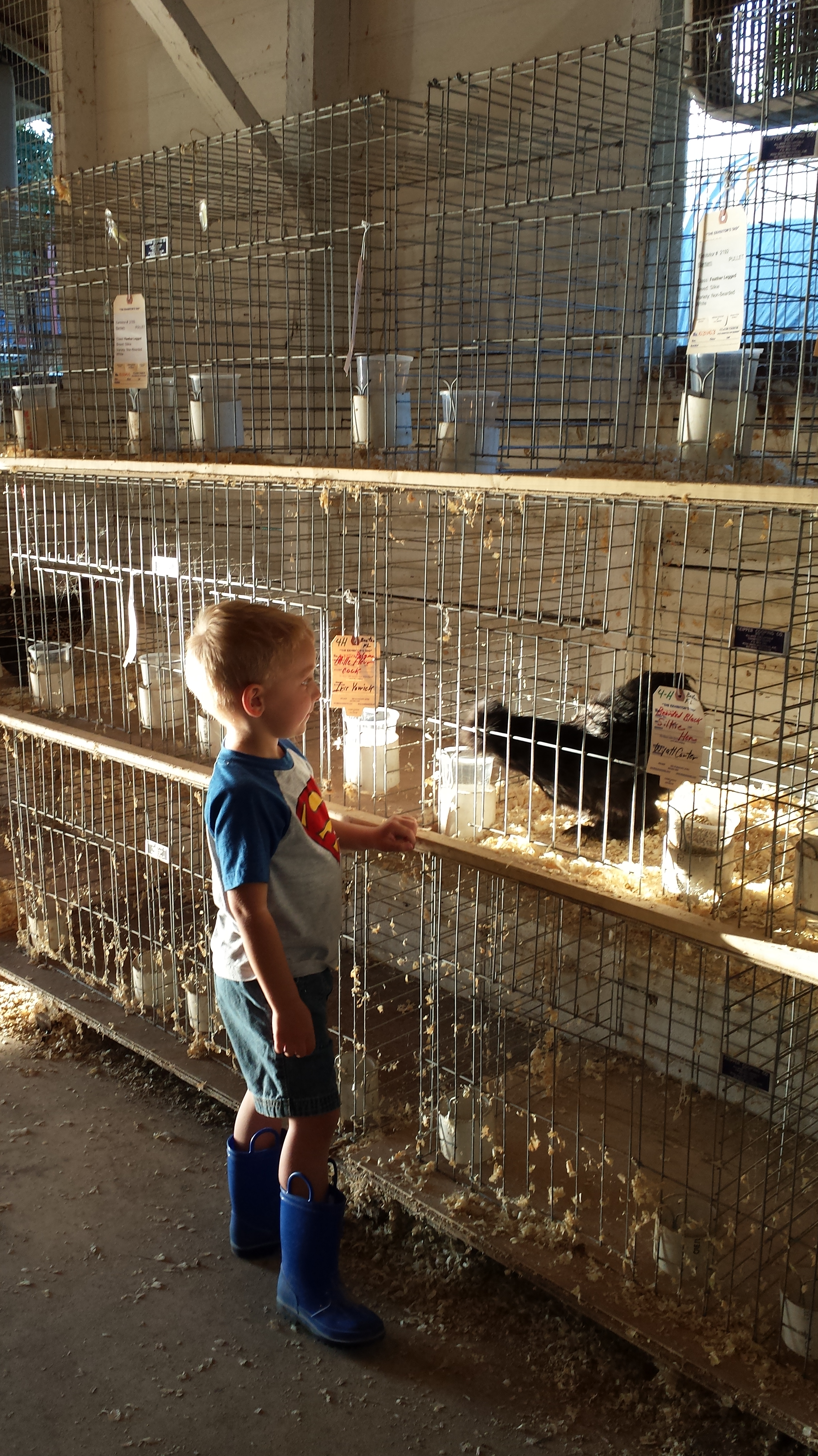
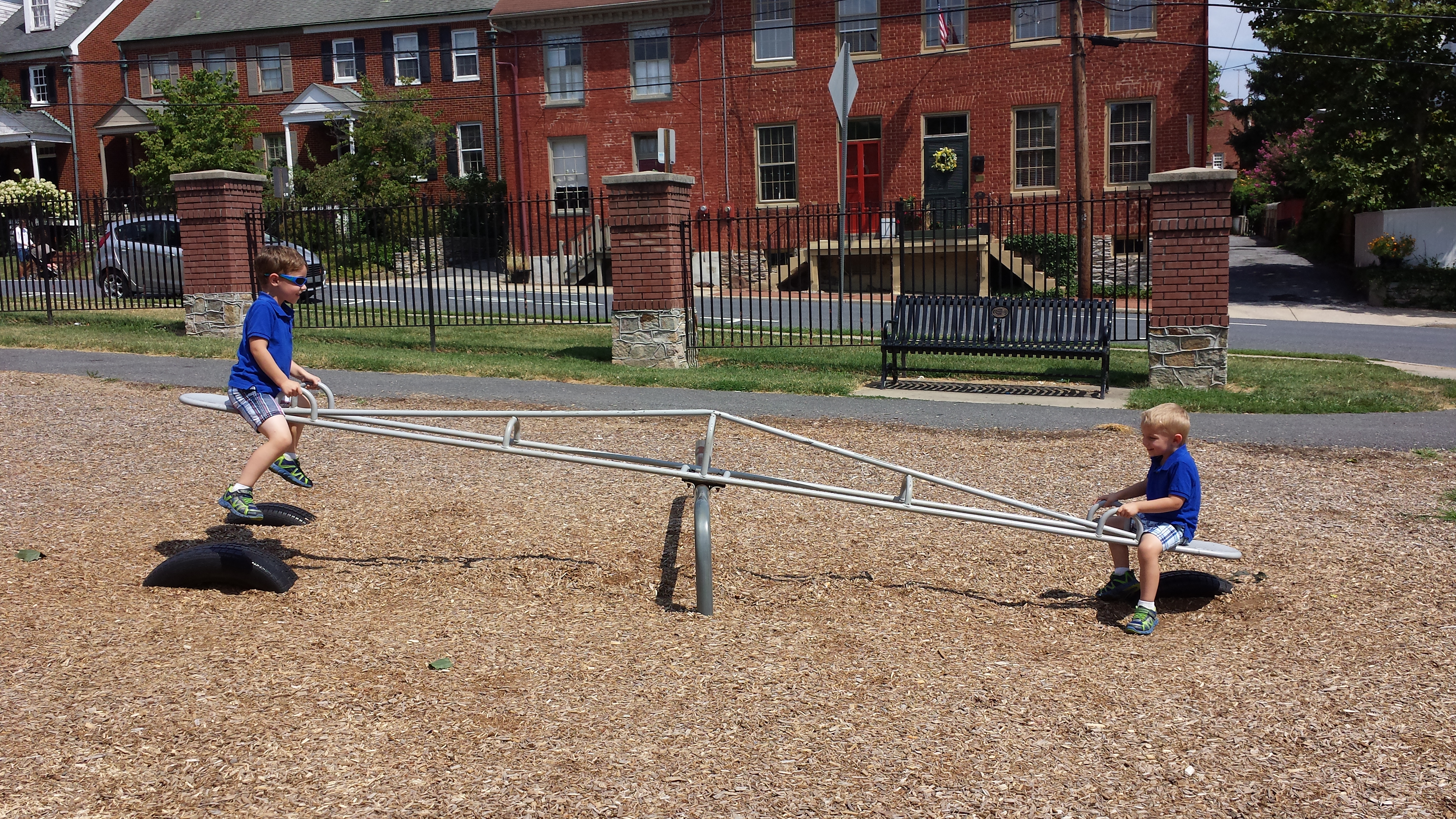
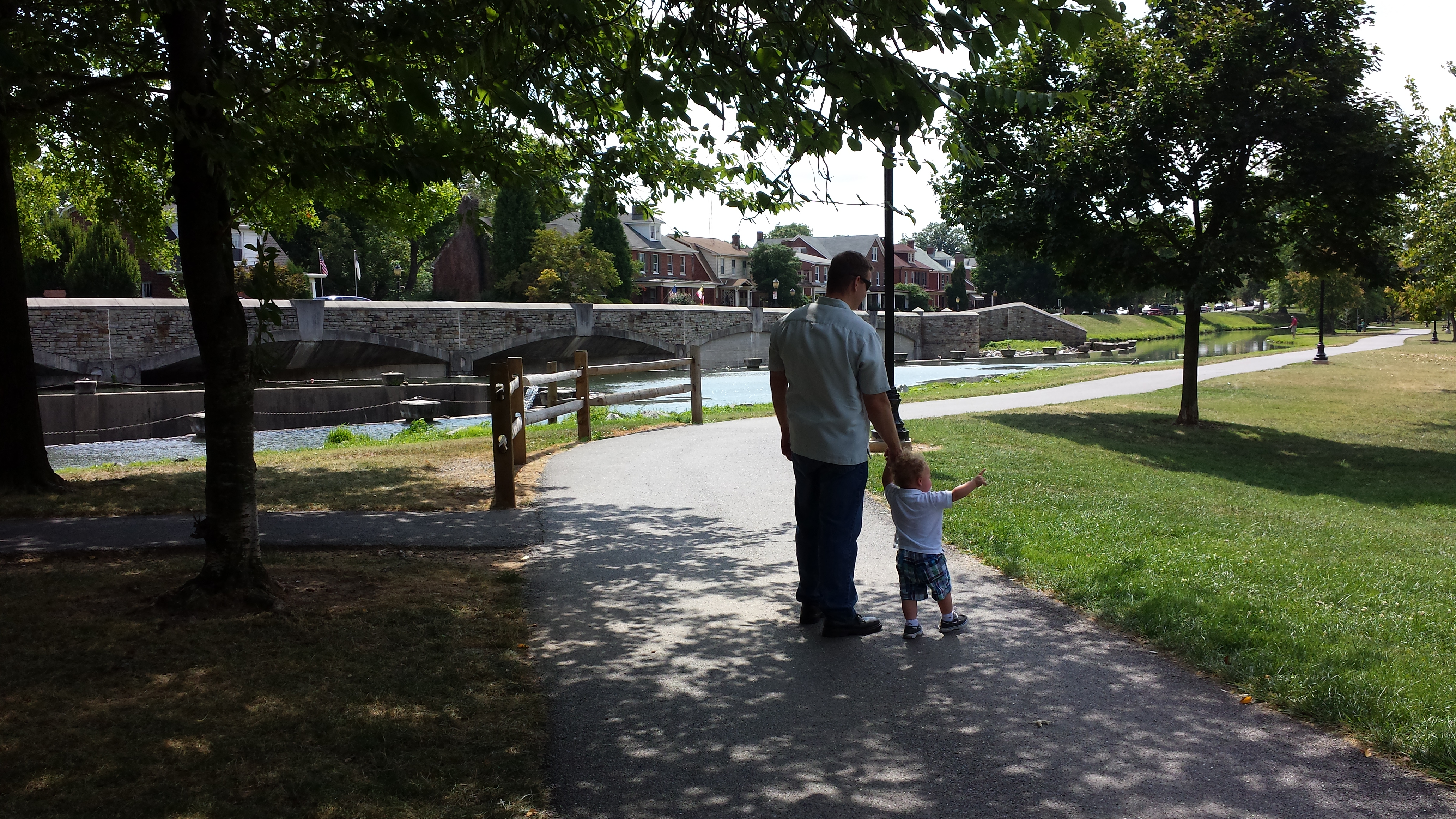
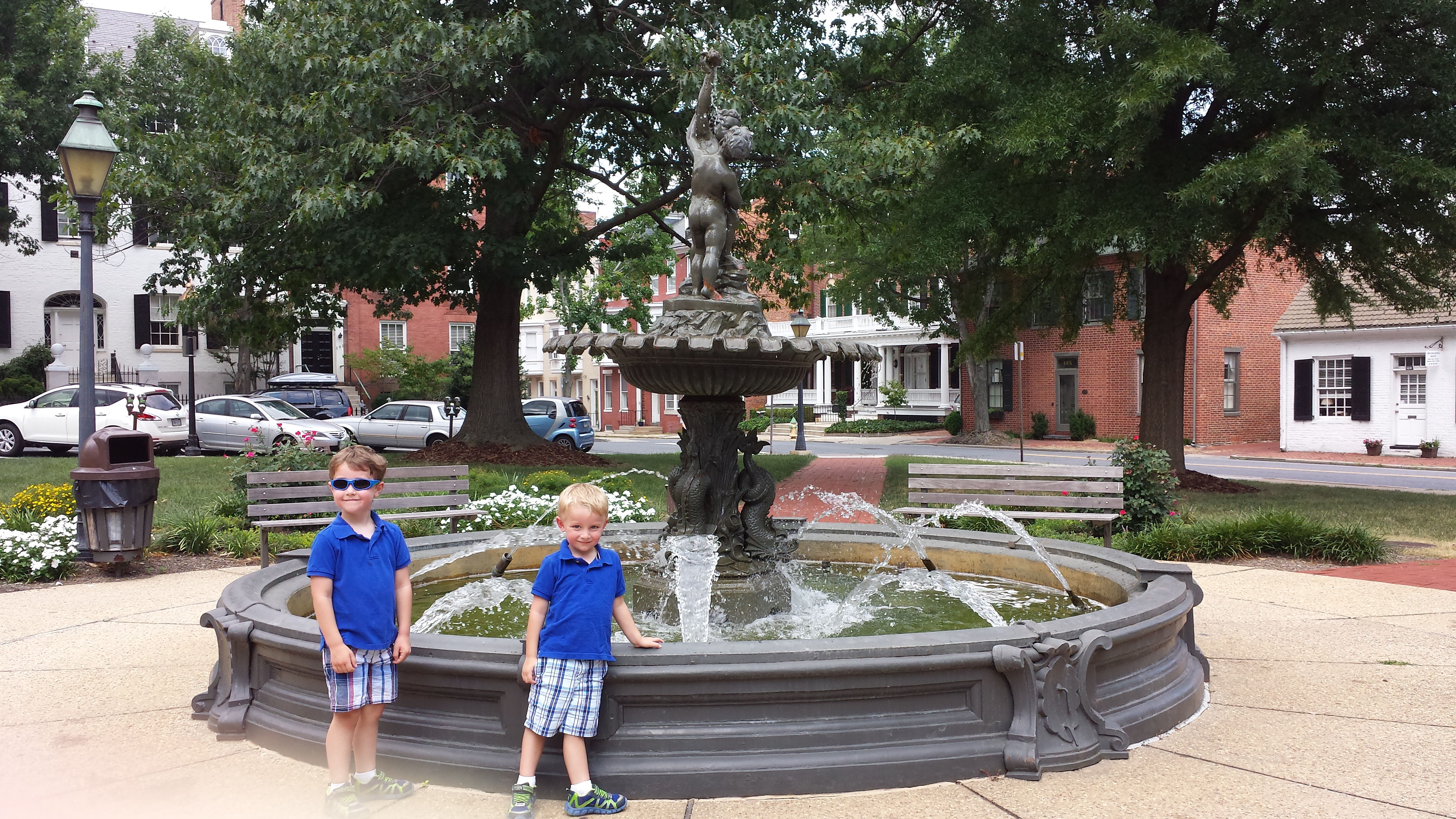
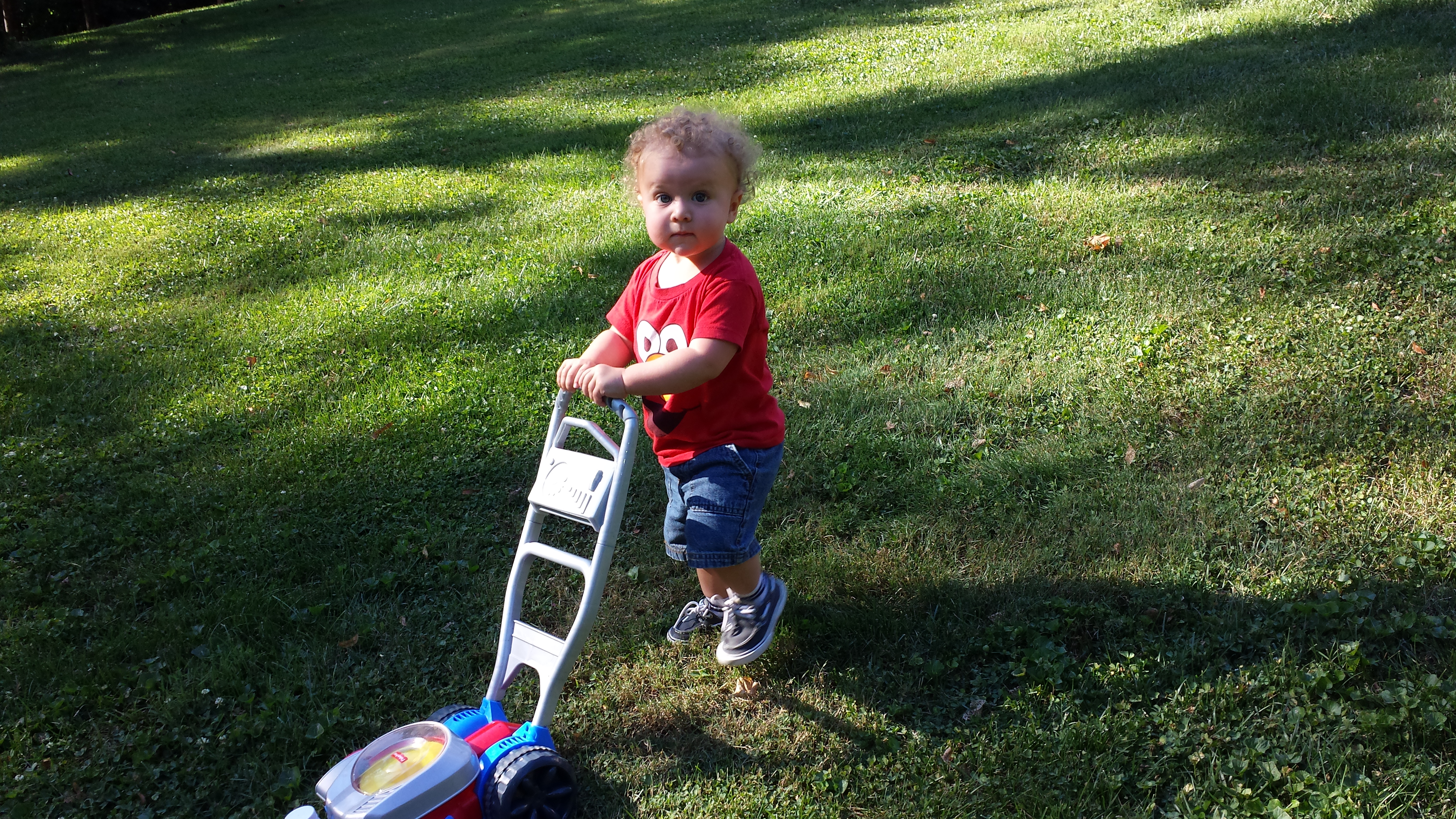
This week I have: Cleared away probably 30 pounds’ worth of papers from my kitchen “organization” center; gone to an ob appointment (baby’s heartbeat sounds good); taken three small boys to the MALL for new shoes; taken said boys to restaurants for lunch three days running; gotten two of them back-to-school haircuts; attended a parent orientation for one boy’s school and a volunteer training for the other’s; gone late-night grocery shopping; met up with two of my girlfriends to take our combined seven boys to one of those crazy indoor bouncy house places; taken the 3-year-old to his Pre-K open house and the 5-year-old to his Kindergarten orientation; spent an afternoon swimming with my three boys and a girlfriend and her three girls; and – joy of joys – discovered a (several times over) leaky bathroom ceiling and a roaring, sparking air-conditioning unit.

These Walls - Last Week of Summer - 1

These Walls - Last Week of Summer - 2

These Walls - Last Week of Summer - 3

These Walls - Last Week of Summer - 4

These Walls - Last Week of Summer - 5

This week I have not: Written another installment in my “What This Catholic Wants in a President” series. Oh well.

These Walls - Last Week of Summer - 6

I have high (and probably unreasonable) hopes for our schedule once my oldest begins school on Monday. For one thing, we’ll be getting up at an actually reasonable (meaning early-to-us-but-probably-not-to-anyone-else) hour, so we’ll have to be able to fit more into the day, right?

For another, I have this brilliant plan to do housework in the mornings (the only time of day when I reliably have energy), rather than frittering away those hours with coffee and Facebook and Diane Rehm. Productivity makes me so happy.

But really, my hopes hinge on that wonderful, almost-unknown-to-me, shimmering mirage that people call “nap time.” Because my biggest challenge in the napping department, the one who would creep into my space every five minutes rather than rest his beautiful head on the inviting (to me) sofa pillow – he’ll be AT SCHOOL. And I’ll be left with (1) the baby who naps for up to three hours a day and (2) the preschooler who falls asleep all over the place.

These Walls - Last Week of Summer - 7

I don’t think it will be that hard to trick him into falling asleep at a time and place of my choosing. (Yes, yes – I know: unreasonable hopes.)

At any rate, I’m hoping that as we settle into the school year and a schedule, I’ll have more time to dedicate to writing. At the very least, I know that I’ll have charge of my three-year-old for five fewer hours per week and my five-year-old for THIRTY-SEVEN AND A HALF (sob!) fewer hours per week and that has got to count for something.

We’ll see how it turns out.

‘Till then, I’ll be recovering from this exhausting-but-mostly-fun Last Week of Summer Vacation and haphazardly trying to prepare myself for the First Week of School. Wish me luck! (And maybe pray for some greatly multiplied sleep?)

These Walls - Last Week of Summer

What This Catholic Wants in a President (And How the Candidates Measure Up) – Part Four

Welcome to Part Four of my oh-so-exciting (ha!) series:

These Walls - What This Catholic Wants in a President Part 4

I’d intended for today’s post to cover the remaining of my “hot” political issues: Immigration, foreign and military policy, the economy, the environment, and education. But when I realized that the immigration issue had become a real stumbling block for me to write about (especially now that The Donald has released his immigration plan) – because it’s just so complicated and touchy, and because I consider it so consequential to our political future – I knew I needed to tackle it separately. Therefore, today’s post will be on immigration alone. I’ll cover the rest of my “hot” issues next week.

For an introduction of the series and an explanation of how my Catholic faith has influenced my political outlook, please see Part One.

For a discussion on some of the qualities I want in a president and a few of the broad issues that impact the more specific, controversial issues (like the one in this post), please see Part Two.

For my positions on the “hot” issues of: A social safety net, abortion, religious freedom, and capital punishment/euthanasia/assisted suicide, please see Part Three.

For my thoughts on how the presidential candidates (of both parties) measure up to my (unreasonably high) standards, please come back next week and beyond for parts Five through however-many-I-get-to.

(Mostly) Hot on the Hot Stuff: Immigration

As I noted in Part Three, I tend to run pretty hot on the social issues. They’re where my Catholicism really comes to bear: I’m for a social safety net for vulnerable populations, against abortion, for religious freedom in the workplace, against capital punishment, for immigration, against euthanasia, and for an active foreign and military policy that aims to resolve conflicts and protect persecuted communities. On a few other issues – the economy, the environment, and education – I guess I have a vague, limited opinion, but I’m just not too wrapped up in them. You can’t be hot on everything.

But immigration – immigration is most definitely an issue that gets people hot. Just look at Donald Trump and the success he’s riding due (in part) to his attacks against illegal immigration, most especially that which comes from Mexico.

Look too at those who railed against the arrival of Eastern European immigrants in the early Twentieth Century, Irish in the Nineteenth, and German in the Eighteenth. This fear of immigrants, this railing against immigration, has always been with us.

(Let’s pause to note, Catholic readers, who the undesirables were in each of those generations: largely Catholic Germans, Catholic Irish, and Catholic Eastern Europeans. And who are our Twenty-first Century boogeymen? Largely Catholic Latinos. Hm.)

I want no part of it.

A couple of years ago, I wrote a pretty comprehensive outline of my thought process on immigration. Rather than re-create the wheel, I include the bulk of that piece here. It’s my case for why conservatives should reconsider their positions on immigration reform and how politicians should treat it more honestly.

1)      People have always moved. (Diving right in to the looong view here.) Through all of human history, people have moved from place to place seeking food, better living conditions, and more freedom. They have fled famine, war, and persecution. They always will.

2)      People deserve a chance to protect and provide for themselves and their families. There are still plenty of places in the world where hunger and war abound. There are even more where corruption or drought or poor economic conditions stymie individuals’ abilities to provide their families with an adequate living. I would move to a different part of the world if doing so would protect my family and secure my future. You would too.

3)      Things change. My family has lived in my state for over 10 generations. The first ones came here in the 1630’s, the last came during the American Revolution. Other than being of Native American ancestry, I’m about as “native” as you can get. But in reality, my family lives in a very different place today than it did in the past. Our state has changed visibly since I was a child; it has changed dramatically since my parents were children. Not long ago, it was largely agrarian with a few long-settled, urban centers. It was the kind of place where the same handful of family names were seen, time and again, on businesses and place names and headstones.

Today it is mostly populated by people who came from someplace else. They came from different parts of the country and far-flung parts of the world. They drove massive development. They brought their own foods and languages and preferences and opinions. They are making this place their own. Never mind the families whose names still grace the towns and street signs. We have, in a sense, been relegated to the past.

But you know what? These newcomers became our friends and eventually, our family. (I, for one, married one of them.) They built businesses and gave us jobs. They brought their skills and came to work for us. In some communities they drove up costs to the point where we can no longer afford to live there. But they also drove growth in ways that have benefited us all.

At heart, I am a rural, small-town girl. I love my family, I am interested in our history, and the biggest part of me wants to live in a place where both are obviously present. It wants to live amongst people who share my values and my tastes. That’s just how I’m built. But things change. The old kind of community of my fantasies (and my family’s past) isn’t here anymore. I can let that frustrate and sadden me, or I can find the good in the way things have become. I choose to seek out the silver linings. I choose to cultivate that part of myself that rejoices in new experiences.

Yes, immigration will change our country. It has many times over. And yes, I can understand how that is an uncomfortable, even frightening prospect for some people. Sometimes I feel it too. But things change. At the end of the day, we can’t stop change from happening. We can only control how we react to it.

4)      Laws change. The United States is a nation of immigrants. All of our ancestors, at some point or another, came here from someplace else. The vast majority came in the past 200 years. It seems to me that most of us have this idea that our own families arrived in careful consideration of American immigration law. That they waited their turn and filed all the proper applications and did everything By The Books. But that’s just not the case. The kind of complicated immigration system we have today is a product of the past few decades. Until the 1920’s, American immigration was wide-open to almost all Europeans. Nearly everyone who arrived at Ellis Island was approved for entry. In the wake of World War I, immigration laws became more restrictive. Later, they became much more complicated.

Today, immigrants gain legal entry to the United States in three primary ways: (1) through the sponsorship of a close family member, (2) through the sponsorship of an employer, and (3) through the Diversity Lottery, which is designed to favor immigration from countries less well-represented in the first two avenues. People from countries that send a lot of emigrants to the United States via family or employer sponsorship are ineligible to apply for the Diversity Lottery. In 2013, people from the following countries are NOT eligible to apply for the Diversity Lottery: Bangladesh, Brazil, Canada, China (mainland-born), Colombia, Dominican Republic, Ecuador, El Salvador, Guatemala, Haiti, India, Jamaica, Mexico, Pakistan, Peru, Philippines, South Korea, United Kingdom (except Northern Ireland) and its dependent territories, and Vietnam.

So if I’m from England or Canada or Mexico or the Philippines and I don’t have a close family member or a prospective employer in the United States to sponsor my immigration, I can’t go. There is no line to wait in. There is no application to fill out. There is no such thing as “legal” immigration for me.

This is entirely different from the system under which my ancestors – and most Americans’ – came to the United States. Our ancestors had wide-open ports or lines at Ellis Island. They had a chance to seek their fortune in an entirely new land with no one to depend upon other than themselves. That system simply cannot be equated to today’s.

To inject a little humor here, I’ll add that when I used to testify on immigration matters, I would tell legislators (truthfully) that my last ancestor to arrive in America was a Hessian soldier paid to fight against the Americans in the War of Independence. And I’d quip, “How much more illegal can you get than that?”

5)      Families matter. It is right that people can sponsor close family members to immigrate into the United States. But the system should be better at ensuring that sponsorship actually results in a successful and timely family reunification. As it is, the immigration system is so backlogged that reunification can take years. It can take five years for a legal permanent resident to bring his or her spouse or minor child into the country. It can take twenty years for a U.S. citizen to bring his or her adult sibling here. (Here is an interesting story about efforts to bring over the adult children of Filipino veterans who fought for the U.S. Armed Services in World War II.)

The family is the most fundamental unit of society. It’s just basic human decency to allow spouses, siblings, and parents/children to be together. Can you imagine having to live without your spouse or small child for five years? Your siblings or adult children for a decade or even two?

6)      Skills matter. It is also right that employers can sponsor workers who will bring vital skills and knowledge to their companies. There should be more of this. There should also be more opportunities for entrepreneurs to come and establish their own businesses in this country. The United States’ success has, in large part, been due to our entrepreneurial spirit and our culture of encouraging ingenuity and innovation. We should unabashedly pursue the immigration of people who will feed that spirit and culture.

7)      The labor market doesn’t lie. When millions of people can come into the United States and find work despite their legal ineligibility to do so, it is proof that the labor market can support them. At the same time, it is understandable that low-skilled Americans would be fearful of competition from an influx of similarly-skilled immigrant workers. I have sympathy for those in that position. But I am also hopeful that higher numbers of legal workers would encourage more entrepreneurial activity, more business, and better opportunities for all.

8)      Long borders will never be 100% secure. The U.S. border with Mexico is nearly 2,000 miles long – just about equal to the length of the East Coast. It goes through deserts and rivers, remote areas and urban ones. And that’s just the Mexican border. Undoubtedly, border security can be improved. Even just fully-funding current programs would help. But insisting that immigration reform wait on complete border security is another way of saying reform should never happen.

9)      We should encourage immigrants to invest themselves in this country. I want people living in the United States to feel like they have a stake in its success. I want people to feel a connection to their communities. I want them to work hard, start businesses, pay taxes, buy houses, volunteer, report crimes, and help their neighbors. We encourage investment when we enable families to be together, when we bring people out of the shadows of illegal immigration, and when we provide people with an opportunity to someday become citizens. It is a terrible idea to legalize a person’s immigration status without providing them a path to citizenship. That sends the message, “We want your labor, but we don’t want you.”

In sum, I’m in favor of immigration reform. But not just that – I’m in favor of more immigration. I understand why some oppose it and I’m sympathetic to (and even naturally inclined to share) their concerns. But this is not an issue that’s going away. No fence or deportation camp or wacky/disturbing proposal to enslave those who come here illegally will deter desperate people from taking a chance on the USA.

As long as people who are oppressed or impoverished place their hope in the United States, there will be those who wish to immigrate. And as long as would-be immigrants see no legal avenue for coming into our country, they will pursue illegal ones.

We would do better, I think, to reform our immigration system wholesale:

We should improve our system of processing immigration applications, etc. so that wait times are cut, families are reunited, and those who are eligible for legal immigration don’t forgo it in favor of a quicker (illegal) route.

We should open the legal immigration application process to all people regardless of their nationality. (Note that I’m not saying that every application should be granted – I’m just saying that all people should be allowed to apply. Or at least given a chance to enter the lottery.) If people saw that there was actually a line for them to legally stand in, they may be less willing to take a chance on entering the country illegally.

We should take more seriously the priorities of reunifying families and attracting talented, innovative individuals.

We should provide a way for those currently in the U.S. illegally to make their status legal. Require clean records, make them pay a fine and taxes, and send them all the way to the back of the so-called line – but give them an option.

That — that practicality, that honesty about the realities of the current (messed up) immigration system, that kind of focus on designing a better one for the future — that’s what I want in a president.

See you back here next week to discuss a few more things I want.

These Walls -- What This Catholic Wants in a President Part 4 - 1

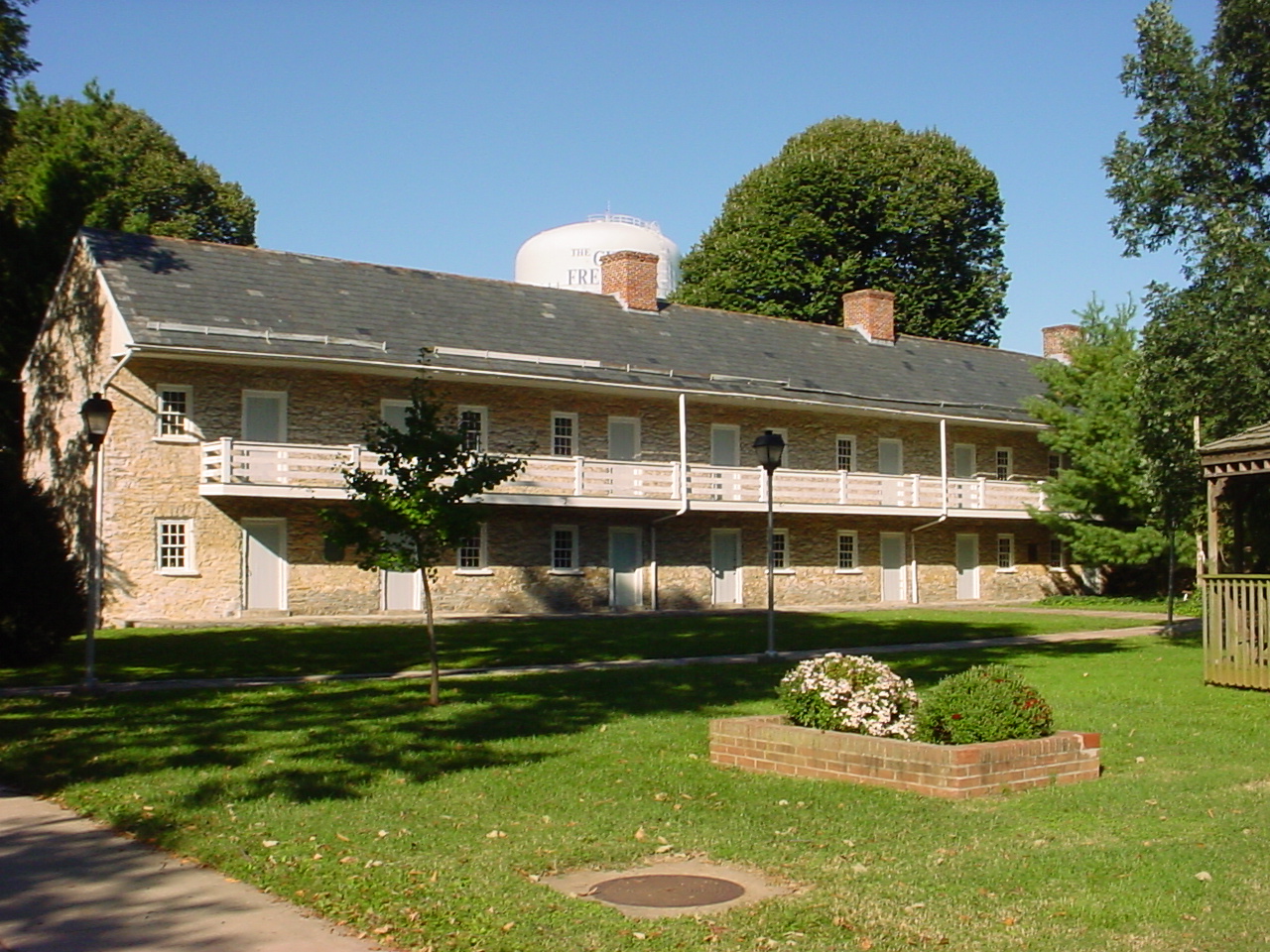
The Hessian Barracks in Frederick, Maryland, where my most illegal ancestor was held after his capture at Yorktown.

~~~

Just as I have for Parts One, Two, and Three, allow me to close by clarifying two points. (I may do so at the end of each of these posts.)

  • First, though I prioritize the Church’s teachings in my own political decision-making, and though I used to lobby for the Church, I do not claim to speak for it. For the Church’s official positions on national-level policy questions, please see the United States Conference of Catholic Bishops. Some of the issues I discuss in this series will have a clear connection to those the USCCB advocates on. Others will not.
  • Second, though I may hold a degree in political science, I am no political scientist. I’m a stay-at-home mom who pays a greater-than-average attention to the news. Feel free to call me out on anything you think I’ve gotten wrong.

Thanks again for joining me. I hope to have you back next week for Part Five!

Lately

Last week, as you may know, I launched my little “What This Catholic Wants in a President” series. It was great. I had so much fun writing the posts (yes – I’m a nerd) and I was gratified by the number of people who expressed their interest in what I’m doing.

But boy, it wiped me out.

I finally got Part Three posted after 10pm on Friday night, not having included half of what I’d hoped to. I promised to post the other half (immigration, foreign and military policy, etc.) on Monday.

But boy, am I still so wiped out.

So I’m moving back that date a bit – to sometime later this week. (Broken promises such as these are one of many reasons why I will never be a Big Blogger.)

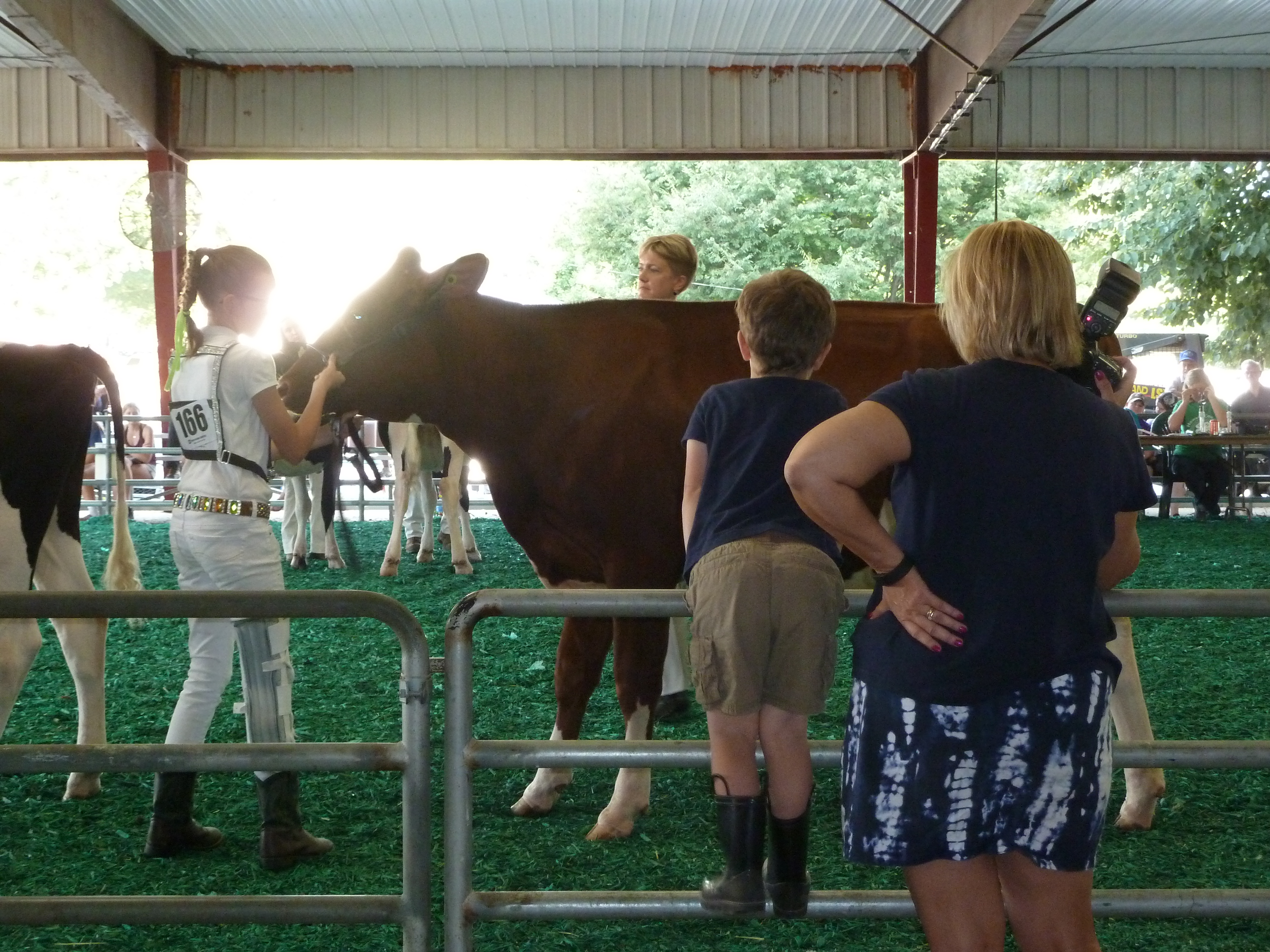
Oh, well. I spent this weekend with my family, preparing for the upcoming school year and helping my husband install a couple of new storm windows. (We sure know how to have fun!) Yesterday we had a full day and today we’ll have another. Last week we enjoyed a couple of days at the county fair.

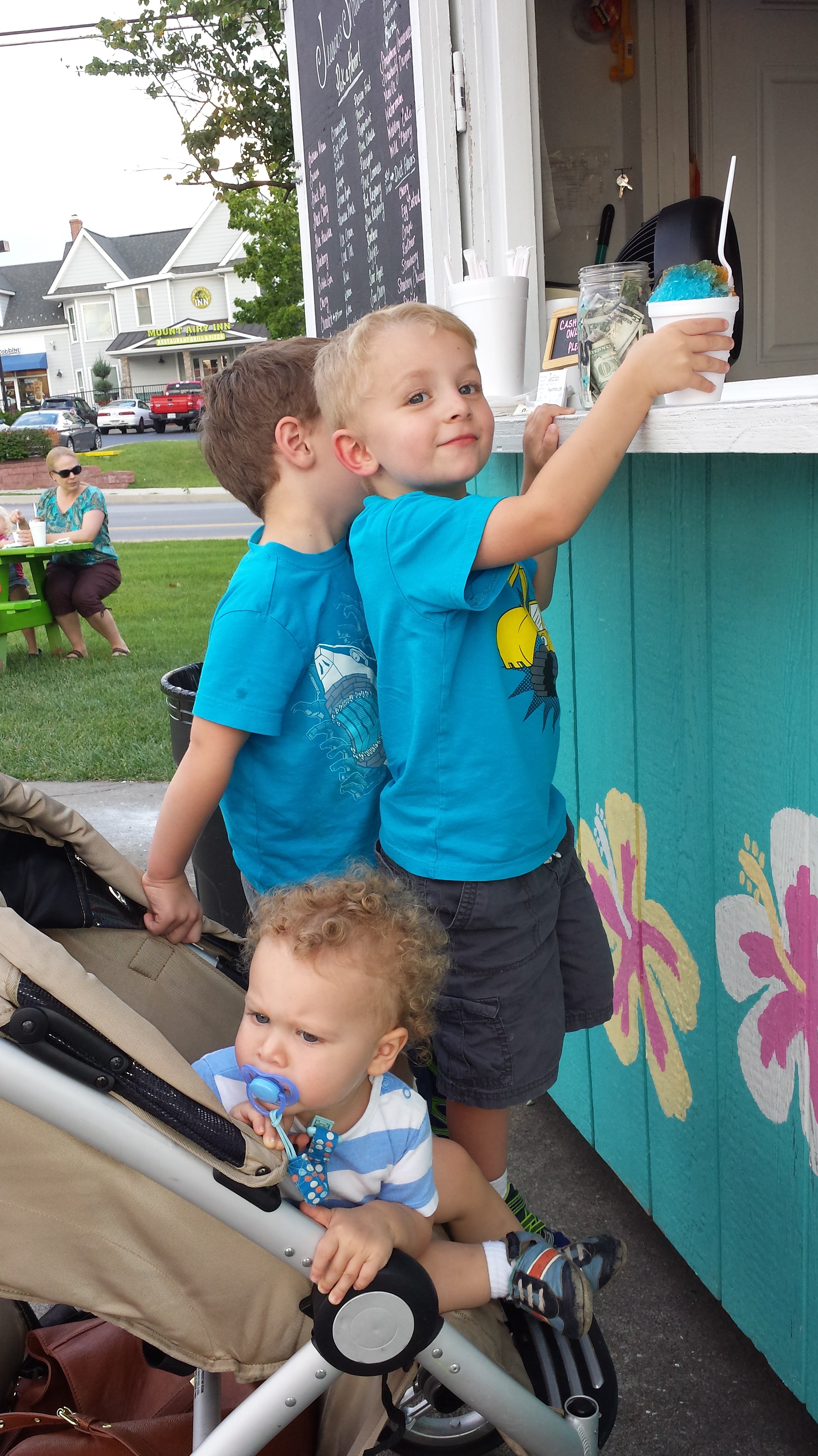
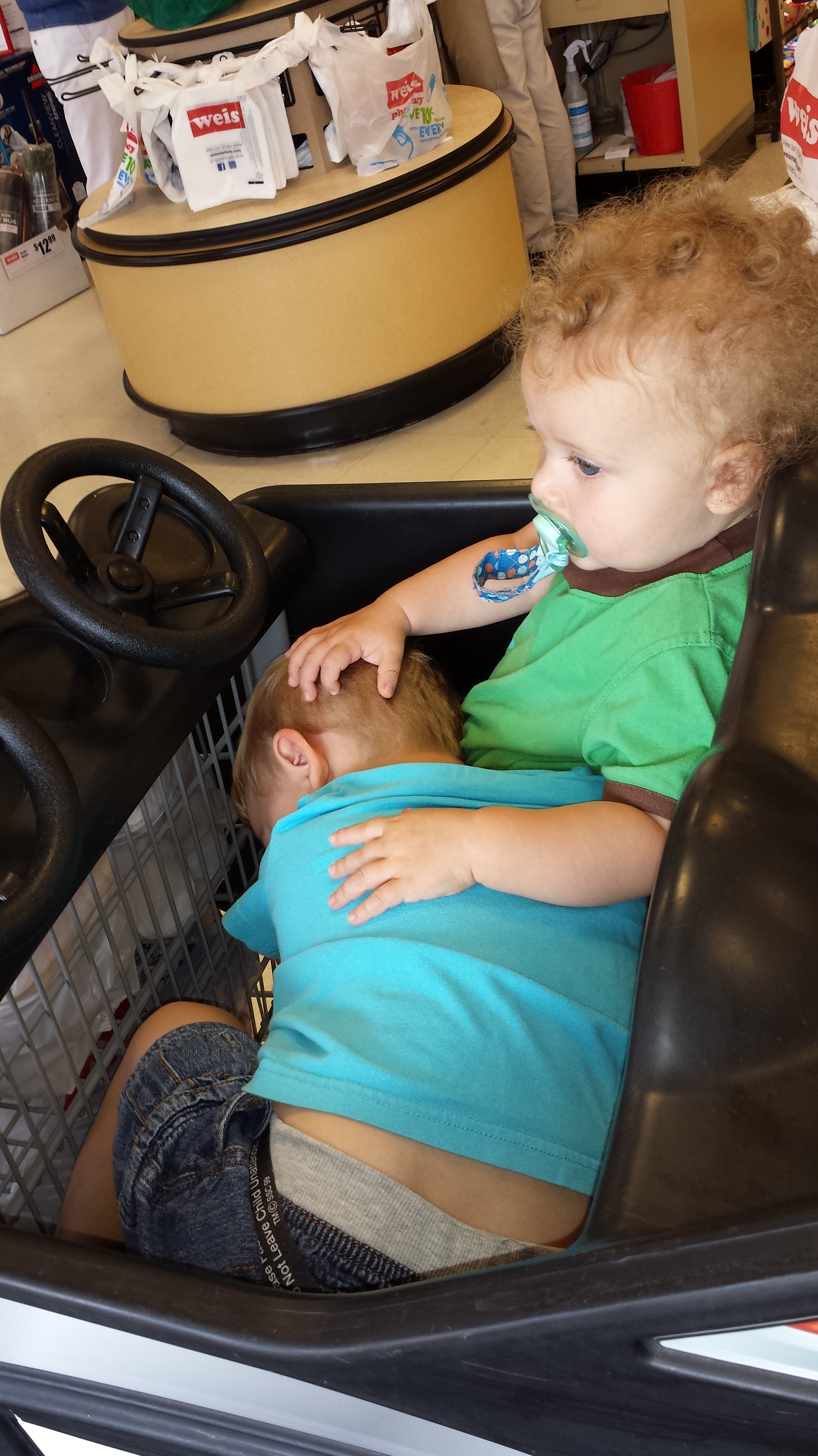
We’ve been good-busy, trying to fit in what we can before summer ends. And I thought you might like to see some pictures of it – of our good-busy, of what we’ve been up to lately:

These Walls - Lately - 1

These Walls - Lately - 2

These Walls - Lately - 3

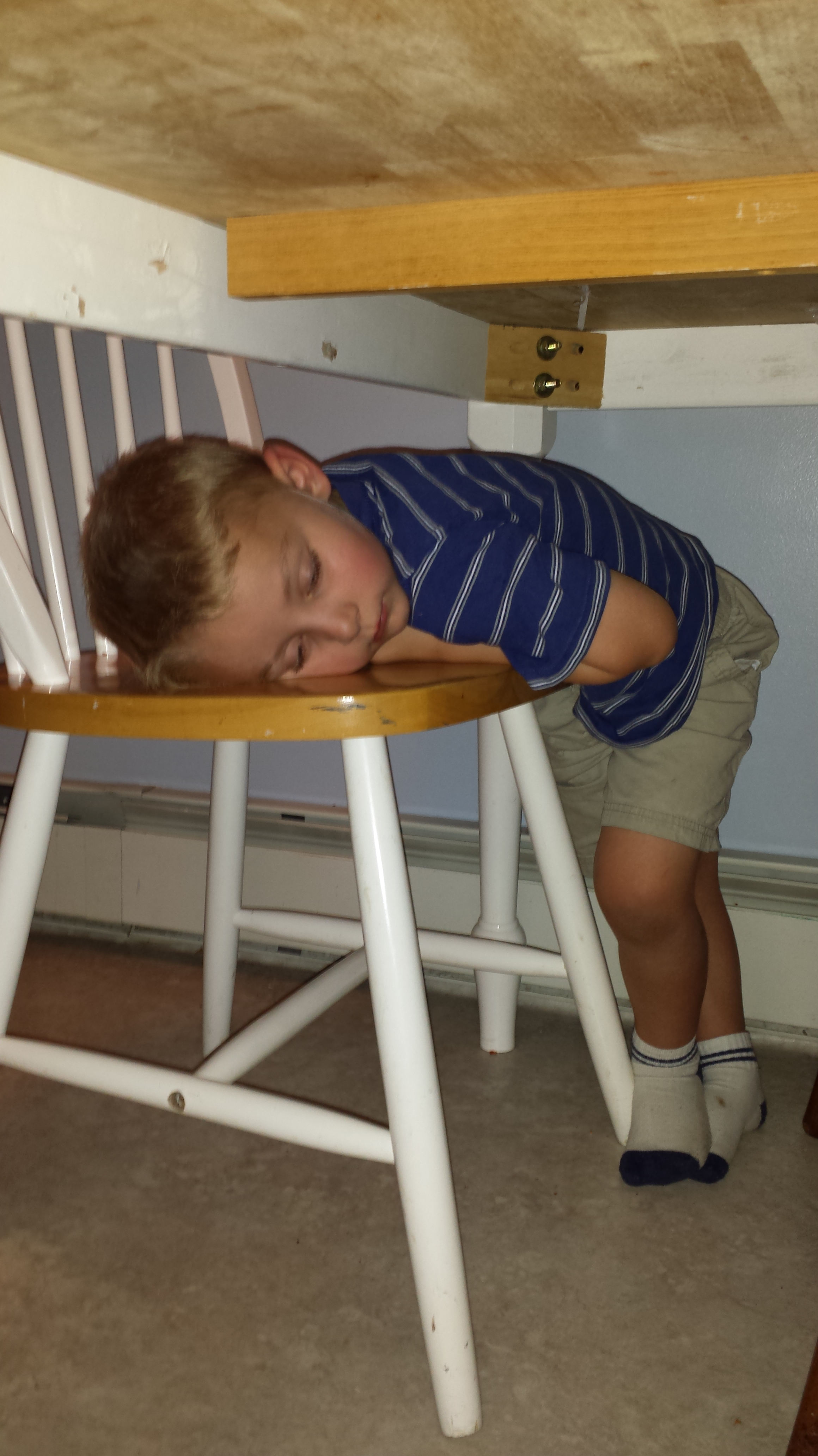
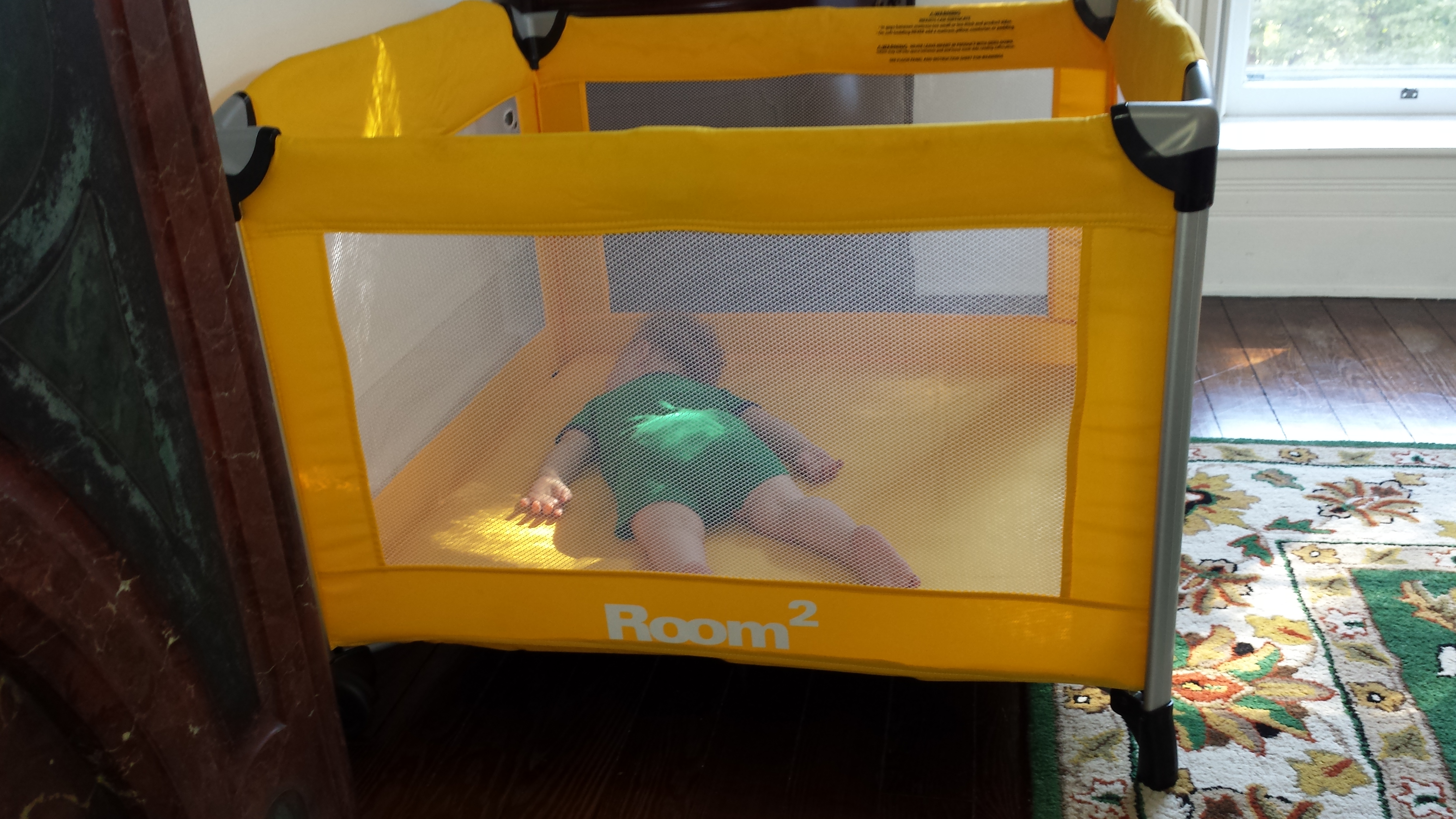
He fell asleep in baby prison.

These Walls - Lately - 4

These Walls - Lately - 5

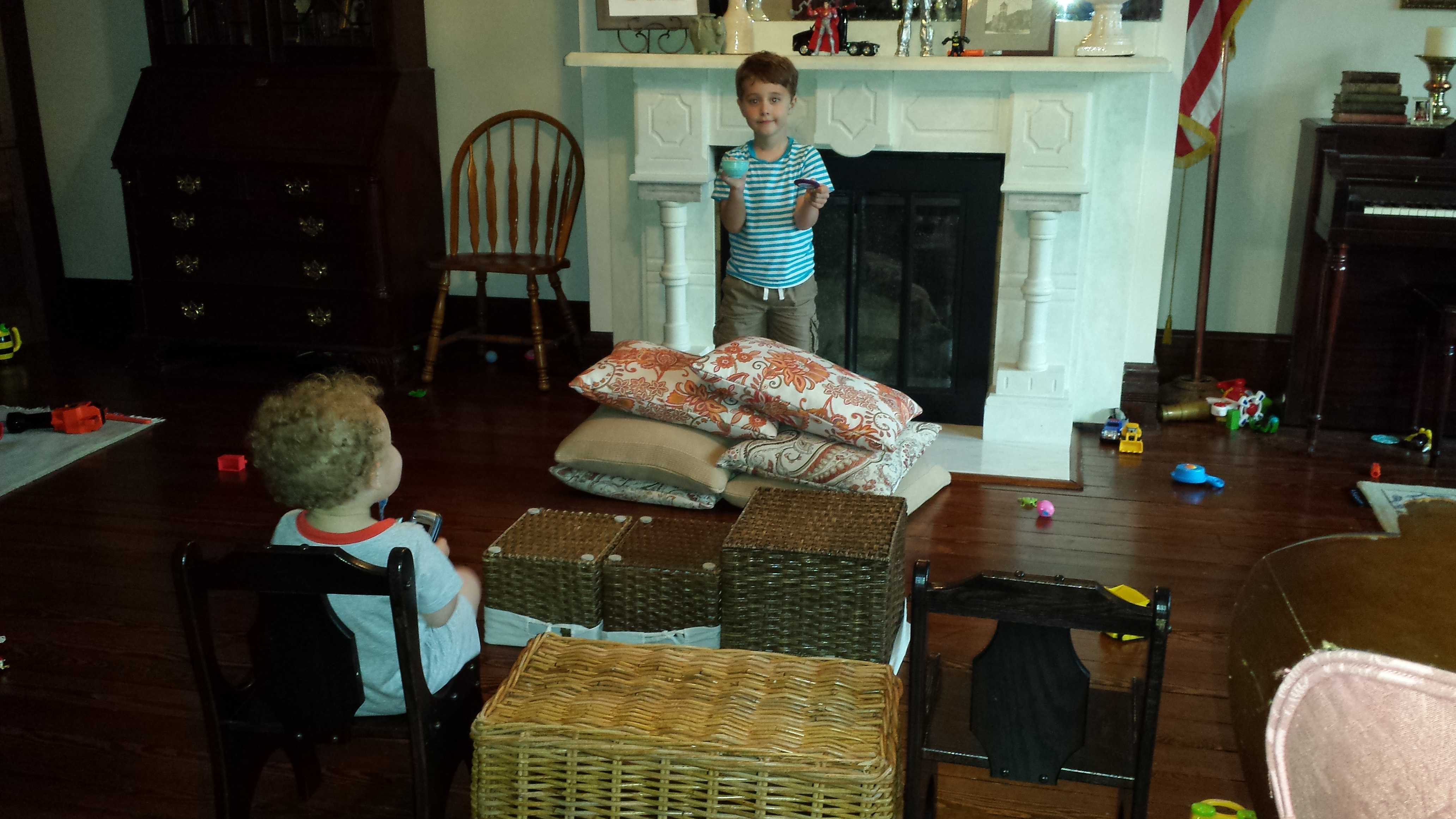
Playing Mass, complete with texting parishioner.

These Walls - Lately - 6

These Walls - Lately - 7

These Walls - Lately - 8

These Walls - Lately - 9

These Walls - Lately - 10

These Walls - Lately - 11

These Walls - Lately - 12

These Walls - Lately - 13

These Walls - Lately - 14

These Walls - Lately - 15

These Walls - Lately - 16

These Walls - Lately - 17

I hope you’re squeezing a bit more summer out of August, before school and September and busier schedules. And if you’ve beat us to it, I hope your school year is off to a great start. “See” you later this week.

These Walls - Lately

What This Catholic Wants in a President (And How the Candidates Measure Up) – Part Three

Welcome to Part Three of my first-ever series:
These Walls - What This Catholic Wants in a President Part Three

Today’s post covers some of the “hot” political issues that I care most about. I had been hoping to cover all such issues in this post, but long enough is long enough. So today you get: the Social Safety Net, Abortion, Religious Freedom, and Capital Punishment/Euthanasia/Assisted Suicide. On Monday (updated to correct to next week, at some point), I’ll cover the remaining issues on my list: Immigration, Foreign and Military Policy, The Economy, The Environment, and Education.

For an introduction of the series and an explanation of how my Catholic faith has influenced my political outlook, please see Part One.

For a discussion on some of the qualities I want in a president and a few of the broad issues that impact the more specific, controversial issues (like those in this post), please see Part Two.

For my thoughts on how the presidential candidates (of both parties) measure up to my (unreasonably high) standards, please come back next week and beyond for parts Five through however-many-I-get-to.

(Mostly) Hot on the Hot Stuff

Alright, now that I’ve gotten past those general, boring, impacts-everything-else issues, how about we get into the juicier stuff?

I tend to run pretty hot on the social issues. They’re where my Catholicism really comes to bear: I’m for a social safety net for vulnerable populations, against abortion, for religious freedom in the workplace, against capital punishment, for immigration, against euthanasia, and for an active foreign and military policy that aims to resolve conflicts and protect persecuted communities.

On a few other issues – the economy, the environment, and education – I guess I have a vague, limited opinion, but I’m just not too wrapped up in them. You can’t be hot on everything.

— Social Safety Net —

First, a decidedly un-Republican thing to be for: a social safety net that helps vulnerable populations actually move forward with their lives. And by “vulnerable populations” I mean the chronically poor, the mentally ill, the addicted, the disabled, and the (practically, if not officially) orphaned.

This is an issue (or rather, a collection of issues) I never knew much about until I worked with it/them. (I used to lobby on poverty-related issues on behalf of the Catholic Church.) There’s so much to the topic that I could write an entire series on it alone, so I won’t try to be exhaustive here. (Lengthy, perhaps – but not exhaustive.) I’ll just make three general points:

One, there are fewer resources for help than you think. I can’t begin to tell you the number of phone calls I’ve fielded from those in need, or whose loved ones were – and I didn’t even do the actual work of trying to connect people to resources. I just lobbied on such issues.

Just lost your job and need a few hundred dollars to tide you over with the rent so you’re not evicted? Sorry – our state’s rental assistance program is teeny tiny and not accepting any more applicants. And eviction prevention programs are so specific that few people qualify for them.

Need longer-term help with the rent because you can’t find a job that pays enough for you to stay afloat in this expensive housing market? Sorry, there’s a seven-year waiting list for Section 8 in your county.

Need a place for you and your kids to stay tonight because you’re (rightly!) trying to get away from an abusive home? Sorry, neither your county nor any of the neighboring ones have a public homeless shelter. And though the Church does operate two women & family shelters in this metropolitan area, both are full, with waiting lists.

Have an adult child showing signs of serious mental illness for whom you want to get help? Sorry, we can get him admitted to the hospital for a day or so, but we can’t do anything else.

Have a child suffering from addiction? Sorry, private rehab programs are expensive and public ones are mostly full.

On public assistance already, but want to take a better-paying position so you can move up the ladder at work and build a small savings to eventually by a car (so your job options won’t be limited by those accessible via public transportation) or put down a rental deposit on your own apartment or just have a little cash in the bank for emergencies?  (You know – the things that would enable you, ultimately, to not need assistance?)  Sorry, if you make any more income you’ll lose your assistance entirely. Same if you start saving. You’d better just stick with that lower-paying job so you don’t end up worse off than you are now.

(Sorry for the length on that last one – it just had to be said.)

The truth is, most of those living in poverty or experiencing other serious hardships have very few options for help. Government programs are often insufficient, understaffed, and restrictive. And though private, charitable programs do wonderful work, their resources (and therefore efforts) are more limited than anyone would like.

For all the complaining we hear about entitlements, most government assistance programs for the poor are not entitlements, meaning that when they’re full, they’re full. They’ve no obligation to take you. Entitlement programs (like Food Stamps), in which any eligible person must be served, are the exception and they’re limited to very specific purposes. Political talk about how large entitlements are and how very much of the budget they consume primarily reflects the size of the Social Security, Medicare, and Medicaid programs. (Of which only the third is exclusive to the poor.)

For many who live in poverty, the odds are simply stacked against them: difficulties related to housing, transportation, education, health, family life, and criminal backgrounds often conspire to make self-improvement literally impossible. And poverty aside, even most middle-class families are ill-equipped to handle the costs associated with addressing severe mental illness, addiction, or disability.

Two, the government is the most effective way for us to collectively support people in need.

Wouldn’t it be wonderful if we could depend on our churches and charities and families and neighborhoods to support those who find themselves in a bind? Absolutely. All of the above do good, important work. But they don’t do nearly enough of it for us as a society to be able to depend upon them alone. Many churches and charities struggle from declining participation and donations. (Note: If you don’t already, please give to your local Catholic Charities!) And many families and neighborhoods, sadly, are not equipped to help their most vulnerable members. Some – the really dysfunctional ones – already do them more harm than good.

Three, simply, I believe that it’s important to help those in need. Just as simple as that: we should help those in need. That’s common human decency. But it’s also one of my calls as a Catholic. I should help the neighbor I know and the one I don’t. I should give of my time, talent, and treasure. And I should care whether the help that’s given is sufficient and effective.

In sum, I want something from a president that most Republicans are unlikely to deliver: a commitment to policies and programs that provide for real, useful assistance for vulnerable populations. If I can find a candidate who seems to fit this bill and is also pro-life, well then, he (or she) may well be my guy.

— Abortion —

Next up, the biggest of the don’t-bring-it-up-at-a-dinner-party topics, the one that’s lighting up our newsfeeds nonetheless: abortion.

If you couldn’t tell by now, I’m really, very much against it. (I’ve written about it in greater detail here.) And I want a candidate who is too.*

Honestly, there is no one issue that is more important to me than abortion. I consider myself pro-life in the fullest sense of the word – I’m against the death penalty and euthanasia, and for programs and policies that help individuals attain the necessities of life. But when it comes down to it, I think there can hardly be anything more wrong in this world than ripping apart an innocent child in her mother’s womb.

Social moderates in the Republican Party advocate, quietly and not, for the Party to shift its focus away from divisive issues like abortion. But this social conservative is here to say that if you give up the stance against abortion, Republican Party, you will lose me. I already disagree with large factions of the Party on immigration and bi-partisanship and social welfare. If the Republican Party ditches its traditional commitment to pro-life policies, then I will have no compelling reason to stay.

In short: I refuse to vote for a Republican candidate for president who isn’t convincingly pro-life. And absent a dire turn of events (i.e. Trump winning the nomination), I can’t see myself voting for a pro-choice Democratic candidate either.

*I think any (eventual) law prohibiting abortion will have to include an exception for when the mother’s life is in danger. Such cases may be exceedingly rare, but politically and legally, I think we’ll have to allow for that possibility.

— Religious Freedom —

Maintaining full, real religious freedom is exceedingly important to me. As I wrote here, I firmly believe that there are no more fundamental rights than those to (life,) speech, and religion. “When I am able to speak freely, my mind is free. When I am able to worship freely, my heart and soul are free too.”

Honestly, I don’t worry that the government is about to start dictating which religious doctrines are or aren’t acceptable for churches to be teaching on Sunday. But I do worry that the government is beginning to sacrifice religious freedom to secular, liberal ideals in seemingly mundane ways: compelling religious organizations to enable their employees to be provided with contraception, requiring private individuals to provide goods and services that violate their consciences, and soon, I expect, requiring even churches to employ and accommodate (via, for instance, the rental of a church hall) individuals who flout their teachings.

I worry when so many of my friends and fellow Americans hear that the government aims to force people to do things that violate their deeply held religious beliefs and they… don’t care. Or worse, they fly to the defense of the government and demonize those targeted by it because the things that are to be done involve those most sacred of secular cows, contraception and abortion.

The fact is, there are slippery slopes all over the place. It’s quite fashionable to be concerned about government overreach insofar as it applies to email and phone records. But what about government overreach concerning what we believe and how our everyday lives reflect those beliefs?

I worry that we might not realize we’re on a slope until we’ve already slipped.

I want a president who will recognize the vital importance of real, full religious freedom and who will oppose policies that have the effect of limiting it.

— Capital Punishment and Euthanasia/Assisted Suicide—

Consistent with my desire to protect newly-conceived life, I also want to preserve the lives of the condemned, the sick, and the elderly. I’ve said it before and I’ll say it again: All human life is sacred – no matter its age or condition or station.

As capital punishment is primarily the purview of the states and execution for federal crimes is very rare, I don’t at all expect this issue to be a focus of the presidential campaign. Nor do I expect Euthanasia or Assisted Suicide (which I wrote about here) to make waves. But on all these counts, I’ll be looking to see what hints the candidates give.

I want a president who values human life in all of its stages – who, like me, opposes capital punishment, euthanasia, and assisted suicide. Most candidates, I imagine, will not join me in that across-the-board opposition. But at the very least, I plan to avoid candidates who speak of capital punishment with relish, or who dismiss the concerns that accompany euthanasia and assisted suicide.

Alright! That’s enough for tonight. (Do you see now why I couldn’t fit all my “hot stuff” into one post?) I hope you come back Monday next week for the remaining topics in this section: Immigration, Foreign and Military Policy, the Economy, the Environment, and Education. Have a great weekend!

~~~

Just as I have for Parts One and Two, allow me to close by clarifying two points. (I may do so at the end of each of these posts.)

  • First, though I prioritize the Church’s teachings in my own political decision-making, and though I used to lobby for the Church, I do not claim to speak for it. For the Church’s official positions on national-level policy questions, please see the United States Conference of Catholic Bishops. Some of the issues I discuss in this series will have a clear connection to those the USCCB advocates on. Others will not.
  • Second, though I may hold a degree in political science, I am no political scientist. I’m a stay-at-home mom who pays a greater-than-average attention to the news. Feel free to call me out on anything you think I’ve gotten wrong.

Thanks again for joining me. I hope to have you back next week for Part Four!

What This Catholic Wants in a President (And How the Candidates Measure Up) – Part Two

Welcome to Part Two of my (who-knows-how-many-parts) series:

These Walls - What This Catholic Wants in a President Part Two

Today’s post covers some of the qualities I want in a president and a few of the broad issues that impact many of the more specific, controversial ones. (And which, because they’re so broad, are perhaps the least well-connected to Church teaching on public policy matters. Be forewarned, Catholics: this one’s all me.)

For an introduction of the series and an explanation of how my Catholic faith has influenced my political outlook, please see Part One.

For discussions on some of those specific, controversial (and perhaps more interesting) issues, please come back tomorrow for Part Three.

But for today:

(I Consider Myself) Pragmatic on the Boring Basics

When I think about the qualities I want in a president, of course I want someone who’s intelligent, just, honest, deliberative, decisive, articulate, persuasive, and plain ol’ good.

That goes without saying, really.

But this year, given our current set of political realities, I’m also looking for a few more particular qualities in a presidential candidate:

  • I want one to whom bipartisanship is not a dirty word – one who refrains from demonizing those he disagrees with and who understands the political necessity of working with members of the other party.
  • I want one with substantial political experience.
  • I want one who is forward-thinking – one who is more interested in long-term, real solutions than temporary fixes.

Now let’s go down that list.

Bipartisanship. As far as I’m concerned, the biggest elephant in the room of national politics is the disdain with which the president and members of Congress regard members of the opposite party. Not to mention the disdain shown by Average Joes on the (physical and virtual) street!

I’m so weary of it.

I’m not the kind of impractical idealist who thinks that everyone ought to just start getting along, already – maybe join hands and sing a verse or two of Kumbaya. I know that there are real, important differences in our policy positions and political aims. I know that there was no golden age of bipartisan cooperation in Washington. And I know that some eras were much worse than our own. (Involving, for instance, actual, physical brawls on the floor of Congress.)

But I wish voters would stop rewarding politicians who make their names by bashing the other side into the ground. Such behavior is juvenile and unproductive and (worse yet) damaging to our democracy.

I also wish people would stop assuming the worst of each other. Few people are so selfish, so mean-spirited as to actively pursue an agenda that sets out to harm everybody else. No — people really, truly have different ideas as to what government should be doing and which policies help people the most. Let’s disagree. Let’s have good debates on which policies make the most sense. But let’s not assume that those who disagree with us mean to do ill.

In short, I want a president who acts like a grown-up in his relations with other politicians. I want one who refrains from demonizing those he disagrees with and who understands the political necessity of working with members of both parties.

Experience. I want a president who has actually had some practice in doing the above.

I want someone who’s shown that he can navigate the treacherous path of legislating and governing: someone who has had substantial experience in the political meat grinder, who’s shown that he can achieve legislative/policy successes, and preferably one who comes from a politically divided state. (Hello Ohio, Florida, and Michigan!) I worry that a candidate from a more lopsidedly-Republican or Democratic state will be ill-equipped to deal with a divided Washington.

I do not want a presidential candidate who is new to politics. It is hard to get legislation passed and to govern effectively, and I don’t think we should assume that any ol’ admirable person can pull it off.

Selfishly, perhaps, I especially don’t want a Republican candidate who’s a novice to politics – I think the last thing the Republican Party needs is a president who’s fresh meat to the opposition. (Sorry, Mr. Carson and Ms. Fiorina. Sorry-not-sorry, Mr. Trump.)

(By the way, I think inexperience was a large part of why President Obama had such a hard time in his first term: he was a one-term senator from an overwhelmingly liberal state. He simply wasn’t equipped to work effectively in Washington.)

I also have no interest in a guy (or gal) who proclaims his intention to go in and change Washington! Because that’s a load of nonsense – the president is going to land where he lands, and he can’t change the landscape. All he can do is try to find his way through it.

Long-term thinking. One of my biggest gripes about politicians lately – and really, the public who feeds them – is that they function in the short-term. Almost all the time.

Everything is about the next election cycle or the next budget extension or the projected amount of cash to be shelled out in the next five years. There’s (little to) no long-term planning.

But as any responsible adult will tell you regarding their private affairs (saving for the down payment, retirement, home repair, college) – it pays to think about the future.

Yet we don’t ask our politicians to think about it. We’re content to let our infrastructure crumble if it means we stick with a lower gas tax. We attempt military interventions with as little force and expense as possible, preferring to serve as a prop rather than a means to a solution. We agree to only the bare minimum of social supports, which trap people in poverty rather than enabling them to escape it.

I want a president who is more forward-thinking than that, one who is more interested in long-term, real solutions than temporary fixes.

Moving on, now, to two broad issues that impact pretty much all of the others we wrestle with in politics: size of government and taxes.

At the root of much of our political discord and division, I see a fundamental disagreement over how large government should be and what it’s even for. And I don’t think the division necessarily breaks down cleanly between Republicans and Democrats. The Republican side, at least, is far messier than politicians would have us believe.

So let’s ask that broad philosophical question, shall we? How big should our national government be and what sort of roles should it play? I think I probably reflect the diversity of the Republican Party in the sense that I like the idea of a small government, but I’m conflicted as to what that means, in practice.

I know people (like my wonderful husband) who are essentially libertarian on this count: they think government should provide for the national defense and the basic legal and (infra)structural framework on which we depend, but that’s pretty much it. To them, the national government should not involve itself in matters of education, social welfare, environment, etc. Maybe the states should, maybe they shouldn’t – it depends on the issue. (Think: Ron Paul.)

On the other end of the Republican spectrum you have the interventionist, America-as-the-greatest-power crowd. (I generalize, of course.) To them, our government is a powerful tool that should be used to secure American interests and ideals abroad – and maybe at home too. (Look at the second Bush administration for a good representation of this mindset. Think about the Middle East, but also think about No Child Left Behind and President Bush’s legacy in Africa.)

As for me, I suppose I tend to the second, and probably go further. I want our government to eliminate waste, to function efficiently, to be really smart about how it goes about its business, but I also want it to be committed to efforts abroad, provide a basic safety net for Americans in need, and help to secure better futures for American individuals, businesses, and communities.

So what do I want from a president in terms of size-of-government speak? I want a president who tends to smaller government and appreciates the need to use it very, very carefully, but who concedes that government, realistically, has a lot of work to do. I have no use for a candidate who’s in a competition to see how itsy-bitsy he (or she) can shrink the government.

Now. That question, obviously, has got to be followed with one on taxes.

And this is maybe the issue where I differ most from the average Republican. Because I think you ought to first figure out what you want government to do, then figure out what kind of tax revenues will support that work. And then government should, you know, actually take in enough in taxes to do what you want it to do.

(In practice, I think politicians should only be willing to support new programs that they would be willing to raise taxes for. I think programs and policies should live and die on their own merit — not as a trade-off on something else.)

Though I disagree with them, I’m not bothered by the libertarian sort who want to slash taxes along with the size and responsibilities of government. There’s logic and consistency there. But I’m really annoyed by more mainstream Republicans who seem to want government to do a fair number of things and yet insist that taxes should still be cut. Nobody wants to pay higher taxes – I get it. But we should be grown-up enough to acknowledge that bridges and roads and schools and Medicare and military endeavors cost money. You can’t have it both ways.

That goes for presidential candidates too. I don’t want a candidate who’s going to beat the “lower taxes” drum right now. I just don’t see that philosophy going anywhere at the moment. I might respect a candidate who beats that drum along with one on cutting out half the government, but I don’t agree with him (or her). As I said before, I think that government, realistically, has a lot of work to do. I want a candidate who will bite the bullet and acknowledge that that work has to be paid for somehow.

I toned it down somewhat (believe it or not), but personally, my primary theme these days regarding what I want in a president is essentially: grown-up, grown-up, grown-up. I want a president who’s more grown-up than the tit-for-tat, exclusionary, complaining, bashing batch of politicians we’ve suffered lately. I want to move on from that behavior – to move forward.

Most simply, I want a candidate who can win and a president who can function.

~~~

Just as I did yesterday, allow me to close by clarifying two points. (I may do so at the end of each of these posts.)

  • First, though I prioritize the Church’s teachings in my own political decision-making, and though I used to lobby for the Church, I do not claim to speak for it. For the Church’s official positions on national-level policy questions, please see the United States Conference of Catholic Bishops. Some of the issues I discuss in this series will have a clear connection to those the USCCB advocates on. Others will not.
  • Second, though I may hold a degree in political science, I am no political scientist. I’m a stay-at-home mom who pays a greater-than-average attention to the news. Feel free to call me out on anything you think I’ve gotten wrong.

Thanks again for joining me. I hope to have you back here tomorrow for Part Three!

What This Catholic Wants In a President (And How the Candidates Measure Up) – Part One

Welcome to my very first series!

These Walls - What This Catholic Wants in a President

I’m excited to be undertaking this little project – something of a departure from most of my recent posts, which have waxed sentimental on home and love and my three beautiful little boys.

These Walls - What This Catholic Wants in a President Part One - 1

Sniff, sniff. Maybe it’s the pregnancy hormones.

Anyway, this series is not a departure from my most recent post, nor will it be surprising to anyone who’s clicked over to this tab.

This week you’ll be getting three posts from me on the topic:

  • Tonight I give you Part One, in which I describe where I come from, politically, and explain why my Catholic faith has had a major influence on my political outlook.
  • Tomorrow you’ll get Part Two, in which I’ll discuss some of the qualities I want in a president, the kind of experience I want him or her to have had, and a few broad issues (government size, taxes, bipartisan cooperation) that tend to have an impact on the more specific, exciting ones.
  • Friday you’ll get Part Three, in which I’ll get into those more specific, exciting political issues – ones like abortion, immigration, the environment, etc.

Beginning next week, and going on for however long I have the stomach for it, I’ll be periodically posting my thoughts on how the individual candidates stack up to my little (okay, long) list of qualifications. I doubt I’ll get to all of them (sooo… maaany… caaandidates…), but I hope to get to most, including all of the frontrunners.

Thanks for joining me today! I hope you’ll come back to check out the rest of the series.

~~~

As a refresher to long-time readers and an introduction to newer ones, let me start by sketching out why this stay-at-home mom makes a habit of writing about politics. And Catholicism. And the meeting of the two.

First and foremost, I grew up in a political family who happened to be Catholic. (Not the other way around.)

My Granddad, who has been involved in Republican politics for most of his life, served as a local elected official through most of my childhood. My aunts and uncles served as treasurers and campaign managers on Granddad’s and others’ campaigns, and we all pitched in on election days. My childhood memories are full of political fundraisers, campaign signs, parades, and the Republican booth at the county fair. It remains rare for us to have a family gathering in which politics isn’t discussed.

In college, I majored in political science. After graduation, I worked for the federal government. Later, I worked as a lobbyist.

And through it all, ever so gradually, my Faith grew more important to me.

In high school, I defended the Church – and especially her position on abortion – from precocious friends who delighted in the debate. In college, I was exposed to devout Catholics (some of them seminarians) who were far more grounded in the Faith than I was. I was challenged by professors (representing a range of religions and political persuasions) who expected logical, well-formed arguments. I interned for an organization that represented the Church’s positions on political matters. I wrote my thesis on why and how the faithful American Catholic fits neatly into neither political party.

As a young professional, though I worked a very staid, governmentish government job, I dabbled in buzzing, what-do-you-do, who-do-you-know Washington. And I was sorely tempted by it. Ultimately, though, I found my place advocating on behalf of the Church, for the poor and the immigrant and those whose religious freedom was under threat. I remained there for over five years, until full-time motherhood beckoned.

~~~

I may be a lifelong Republican, born into a solidly, actively Republican family, but I wouldn’t say I’m your typical Republican. (As if any member of the party of Lincoln and Reagan and Tea Partyers and Pro-Lifers and farmers and Wall Street’ers can really be called ‘typical’.)

Because first and foremost, I’m a Catholic. And that designation will always mean more to me than that of ‘Republican.’

For one, my Faith forms and encapsulates my convictions on God and goodness and justice and salvation and eternity. (And really, what can be more important than those things?)

For another, political parties change their stripes all the time. What was liberal becomes conservative, what was conservative becomes populist, what was popular becomes unpopular. Polls change, trends change, issue positions slip and slide all over the place. But the Church – and the Truths she defends – they remain steady.

So if I attach myself to a thing so of-this-world as a political party at the expense of the Truths and rights and wrongs of particular issues and particular candidates – well then, I think I’ve erred, not just logically, but morally.

So I no longer go down the list and think that anyone with an (R) after their name is good enough. I no longer look for my crop of political priorities in the platform of the Republican Party.

Instead, I start with the fundamental Truth that underlies the Church’s position on most of the issues that people consider ‘political’: All human life is sacred.

All human life is sacred – no matter its age or condition or station.

That means the unborn baby at risk of abortion, the pregnant woman with no financial or emotional support, the child growing up in poverty, the black man unjustly targeted by police, the police officers who risk their lives for the safety of their communities, the undocumented immigrant, the refugee abroad, the serviceman completing his third tour, the murderer on death row, the cancer patient living out her remaining days in hospice care – all of their lives are sacred.

And I’m obliged to favor policies that respect the importance of those lives.

So that’s what I try to do. And that’s what I want ‘my’ presidential candidate to do – because yes, I want a president who reflects my values.

Why, you might ask, do I still identify as a Republican when I no longer agree to always toe the Republican line? I suppose it’s because I still want a place in our imperfect, limited political system. (And specifically, I want to be able to vote in primaries.) The fact remains that we have just two major political parties in this country and most anyone who wants to make a difference has to choose one or the other. Between the two, the answer for me is still clearly: R.

~~~

To close, allow me to clarify two points:

  • First, though I prioritize the Church’s teachings in my own political decision-making, and though I used to lobby for the Church, I do not claim to speak for it. For the Church’s official positions on national-level policy questions, please see the United States Conference of Catholic Bishops. Some of the issues I discuss in this series will have a clear connection to those the USCCB advocates on. Others will not.
  • Second, though I may hold a degree in political science, I am no political scientist. I’m a stay-at-home mom who pays a greater-than-average attention to the news. Feel free to call me out on anything you think I’ve gotten wrong.

Thanks again for joining me. I hope to have you back here tomorrow!

These Walls - What This Catholic Wants in a President Part One - 2

7 Quick Takes on Last Night’s Debate (Vol. 35)

Has it really been a full week since I’ve posted? Nah… can’t be. At least it doesn’t feel like it, because I’ve been doing so much writing. (Which has felt great!) I was trying to get something out in time for last night’s debates, but I just couldn’t pull it off. C’est la vie.


The silver lining to the situation is that I now have enough written to kick off a little series (Is this my first series? I think it might be) next week:

These Walls - 7QT on Last Night's Debates - 2

I’ll begin with a few posts on (you guessed it) what I want in a President and what my Catholic faith has to do with it. Then I’ll follow with several posts on (you guessed again) how I think the individual candidates measure up.

Should be fun!

Now, on to this week’s 7 Quick Takes regarding last night’s prime-time Republican presidential debate.

Seven Quick Takes Friday

—1—

First of all, this thing (the prime-time debate) was so much more fun than I expected it to be! I was kind of dreading watching the debate, approaching it as a sort of duty. I figured it would produce an annoying combination of boredom and discomfort, and I feared that most of the candidates would cower in the presence of The Donald. (Cringe.)

But no fear! Right out of the gate, the challenges started coming fast, with Fox panelists asking really tough questions of the candidates – especially of Trump. The first was perfect:

“Is there anyone on stage, and can I see hands, who is unwilling tonight to pledge your support to the eventual nominee of the Republican party and pledge to not run an independent campaign against that person?”

Of course Mr. Trump raised his hand. Good to have that out there in the open – he won’t promise, in the event he loses the Republican primary, not to run an independent campaign during the general election. Lovely.

And it went on. I don’t think time was distributed quite fairly – a few candidates (namely, Ben Carson) seemed to get passed over for the more interesting-to-the-panelists candidates (including John Kasich, who barely made it into the group of ten, based on his poll numbers) — but I thought each candidate was asked fair, tough questions. There were some interesting exchanges and verbal tussles (namely, between Rand Paul and Chris Christie), and some great quotes and one-liners.

In sum, I’m no fan of Fox News, but I was generally impressed with how they conducted the debate.

But, I was really annoyed by that last question, on God, asked by a Facebook user:

“I want to know if any of them have received a word from God on what they should do and take care of first.”

I’m not opposed to the candidates being asked questions regarding their faith and how it plays into their policy priorities. (That’s kind of my thing here.) But the way it was phrased just seemed silly to me. And it probably seemed gleefully absurd to most Democrats.

—2—

More fun than the debate itself, perhaps, was following along with others via Facebook and Twitter. I was taking notes on my laptop to prepare myself for writing this post and at one point I typed: “Okay, having a hard time keeping up here now because Twitter and FB are way too much fun.” They were! I’m honestly looking forward to the next debate.
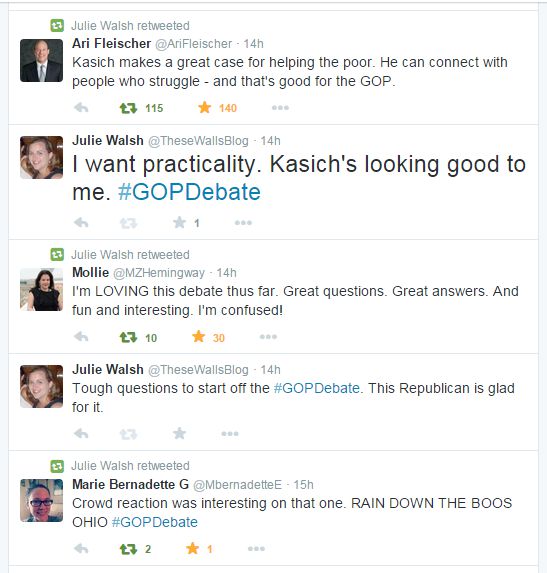
Here’s some of what I was tweeting and re-tweeting:

These Walls - 7QT on Last Night's Debate - 3

These Walls - 7QT on Last Night's Debate - 4

—3—

Now for my take on the winners (as I declare them to be):

Marco Rubio. He looked great — came across as really composed and comfortable – “presidential”, even. He was articulate and on-point and made valuable contributions to the debate. I couldn’t help but relish the idea of him going up against Hillary Clinton in a general election debate. I went in liking the guy and came away more impressed than I expected to be. He might just have what it takes.

John Kasich. I also went in liking him and he did not disappoint (except for maybe bringing up the fact that his father was a mailman a few too many times). He had good, well-put-together answers and came across as both compassionate and competent. We need a dose of both right now.

Ted Cruz. I am no fan of the guy. Honestly, between his Evangelical-preacher demeanor (sorry, Evangelicals), his willingness to advance himself at the expense of the Party, and his position on immigration, he bugs the heck out of me. But I think he did a good job last night. He was composed and articulate and probably persuasive, if you didn’t already think he was a big creeper. (I wouldn’t know, being a member of that camp myself.)

Mike Huckabee. Again, I’m not a big fan. There’s nothing (or not much) I substantively dislike about him, but I don’t think he has a snowball’s chance in hell with the general electorate. So, you know – why bother? But he did well last night. He looked more comfortable than any of the others (save maybe Rubio) – really in his element. And his responses were smart, colorful, and likeable.

Rand Paul. Another one of whom I am decidedly not a fan. On him, though, it’s mostly a matter of substance – I’m just about as far removed from a libertarian as a Republican can come. The guy might be perfectly lovely – I don’t know and I honestly don’t care. To his fans, he probably came across very well. He spoke a fair amount, he got in several (seemingly well-rehearsed) one-liners, and he had a nice little tussle with Chris Christie. (All of which is why I’m putting him in the “winner” category.) But he still seems like such a niche candidate to me. I don’t think he translates any better to the masses now than he did before the debate.

Ben Carson. This one surprised me. Being from Maryland, I’ve known of him (as a famous pediatric neurosurgeon) for years, so I’m naturally fond of him. But he’s a complete political novice (more so even than Mr. Trump, who excels in the politics of business and television), and I really expected him to flounder. He did nothing of the sort. He didn’t get much air time, but he used his opportunities well, coming across as intelligent and comfortable; he even seemed like he was enjoying himself. I didn’t love all his answers, but I thought he both held his own and made a generally favorable impression. His campaign has more of a future than I’d thought.

—4—

And my take on the “meh” middle and the outright losers. (But what do I know?)

Scott Walker. He could really go either way. His answers seemed solid, so I know some people will put him in the “winners” camp. But he just seemed so flat to me. I guess I had a more fiery impression of him, because boy, was I unimpressed with his demeanor. He did nothing to stand out and in such a large field of candidates, I think that will be a handicap.

Chris Christie. Again with the going either way. He seemed very him on his answers, which his supporters will like. But he also seemed flat, which (again) surprised me, given his reputation. Moreover, I just don’t think he did much to win over the (sizeable) number of people who are lukewarm-to-hostile on him. I was kind of bored with his contribution.

Donald Trump. I just cannot stand that man. He was obnoxious and his answers were shallow and abrasive — exactly as I had expected. But I’m still shocked that as many people like him as they do, so who knows — what I saw as the height of annoying they may have seen as appealing. I have no idea. I give up.

Jep Bush. I like the guy – I always have. But for all his experience and money, he has a HUGE hurdle to overcome, given his surname. (I mean, while writing this I accidentally typed “George Bush.”) And I don’t think he performed nearly well enough to begin to move past it. I thought he looked uncomfortable and out of his element. It was painfully obvious just how long it’s been since he’s participated in a debate. Worse, his answers were just kind of okay and he didn’t seem to exude any of his brother’s joy or energy. He struck me as a candidate from another, less interesting generation. I walked away thinking of him as a less formidable competitor than I expected.

—5—

I didn’t get to watch the 5pm, second-tier debate (witching-hour viewing with three boys under the age of six? not gonna happen), but I’ve heard that Carly Fiorina did really, really well. I’ll have to check it out. I know very little about her.

—6—

You know I’ve got to say something more about Trump.

He dominated in the run-up to the debate and maybe he’ll dominate in the wake of it, but I’m glad that he didn’t get more air time during the debate than he did. Because just the idea of Donald Trump was so distracting to me, I had a hard time focusing on the others.

I can hardly describe to you just how much that man bothers me. I could go on and on. But at one point I posted the following on social media, and I’ll let it sum up my opinion of the guy:

“I’m trying to take notes on this thing, but every time I get to Trump, I can’t seem to write anything but: JERK.”

—7—

As for those I’m more favorably disposed to, I went in liking Bush, Rubio, and Kasich, but I wasn’t sure if any of them really had what it takes. Based on their performances last night, I’m less sure than ever about Bush. But I’m more hopeful than I expected to be about Rubio and Kasich. I plan to look into them further. Both strike me as pragmatic and positive, and compassionate to those who are struggling. It’s a good start.

~~~

Thanks for indulging my poly-sci-major giddiness about yesterday’s debates. I hope you’ll come back next week for the beginning of my little series. And I hope you’ll head over to Kelly’s today to check out the other Quick Takes! Have a great weekend!

These Walls - 7QT on Last Night's Debate - 5

FLOP {pretty, happy, funny, real} (Vol. 19)

{pretty,happy,funny,real}

{pretty}

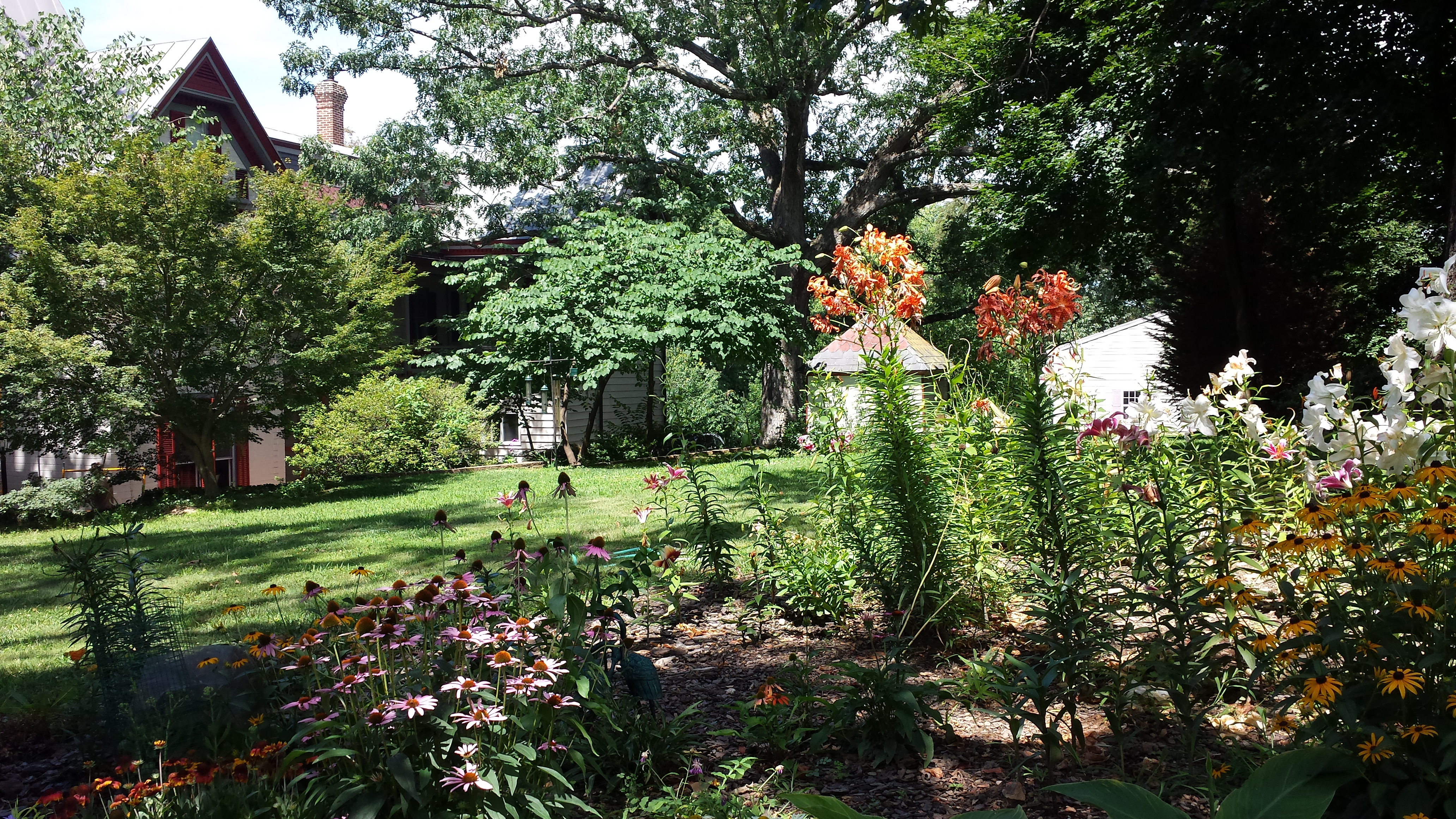
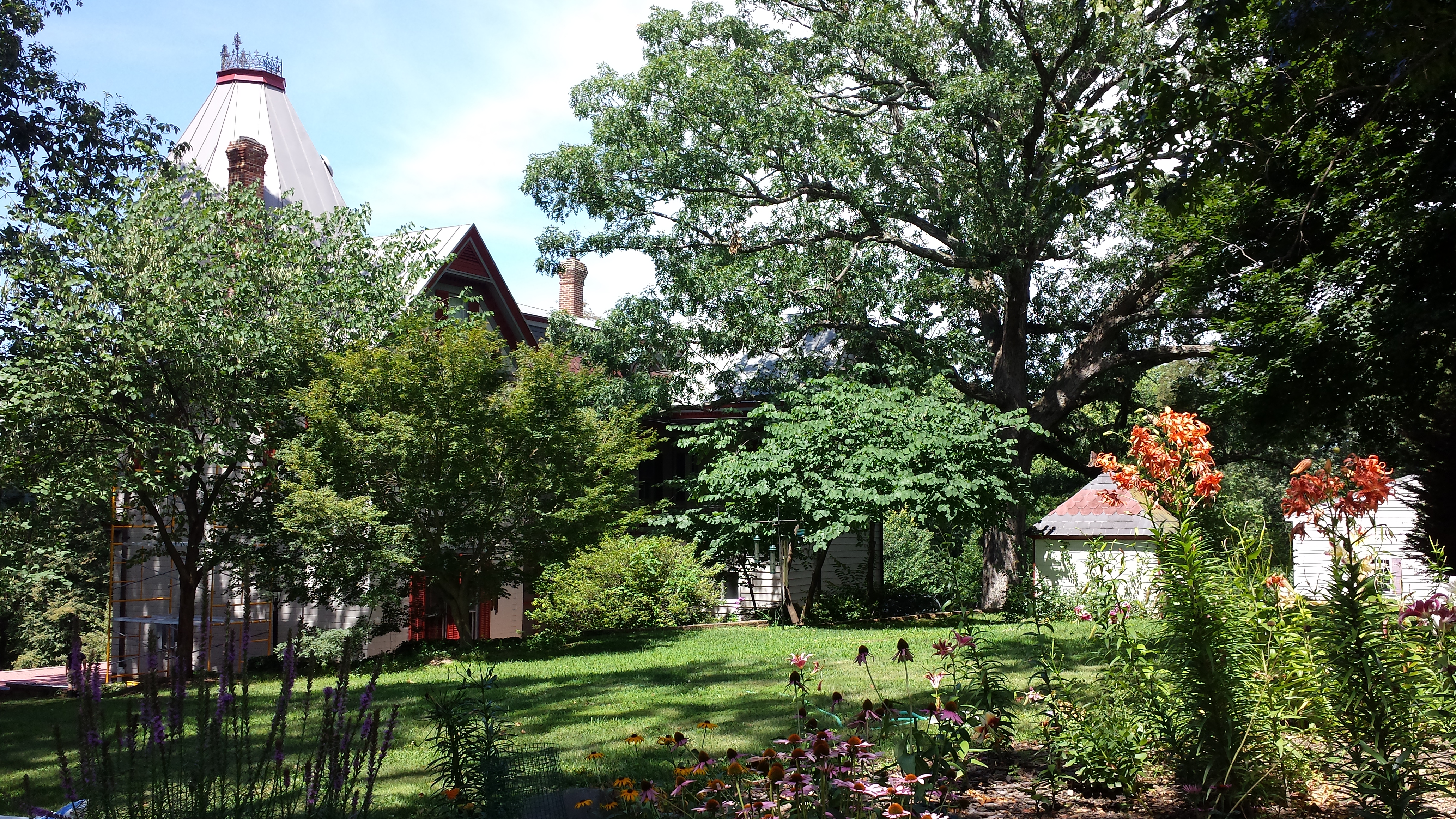
I thought it would be nice to do {phfr} this week, so I reviewed my phone’s photos (no idea where my regular camera is at the moment) to see what I could come up with. And I found, like, three shots that the average person would consider {pretty}. Which are pretty much duplicates of each other:

These Walls - PHFR19 - 1

These Walls - PHFR19 - 2

These Walls - PHFR19 - 3

See?

Otherwise, all I have to show you are scenes that are “boy” pretty, if you will. You know, like pirates and scaffolding and a jungle’s worth of animals gathered around a single model tree.

These Walls - PHFR19 - 4

These Walls - PHFR19 - 5

These Walls - PHFR19 - 6

Such is my life these days: a slice of regular pretty frosted with a thick layer of the boy variety.

{happy}

Those boys are so sweet, though. They make me so {happy}. This weekend they earned their own money for the first time. Their cousin had lost a small toy she’d brought with her to my parents’ house, so my oldest son asked his grandma:

“Can I do some work so you can give me some money, so I can give it to Caroline, so she can give it to her mommy to buy a new Mikey?”

My preggo heart was full to bursting – my boy (sniff, sniff) wants to earn money so he can (sniff, sniff) buy his cousin a replacement for the toy she lost? (Sob!)

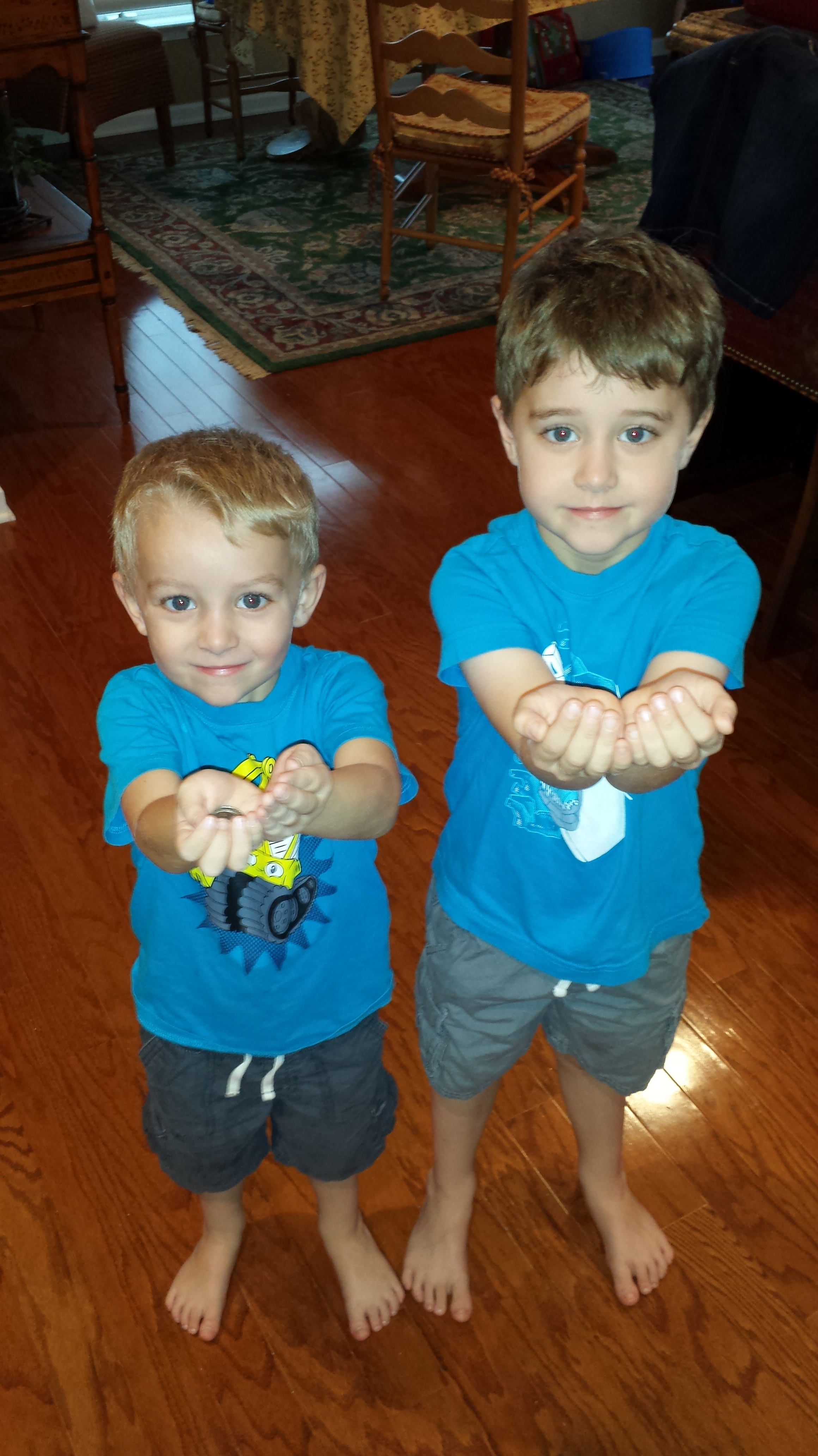
Both boys did a little cleaning around the house (just toys – not much of a feat) and when they’d finished, my mom paid them each SIX quarters. Man, oh man – were they proud of themselves!

These Walls - PHFR19 - 7

No, they’re not begging for food — they’re showing off their hard-earned quarters.

And all’s well that ends well: My niece found her toy, so the boys get to keep their earnings. Now to decide what to do with them!

{funny}

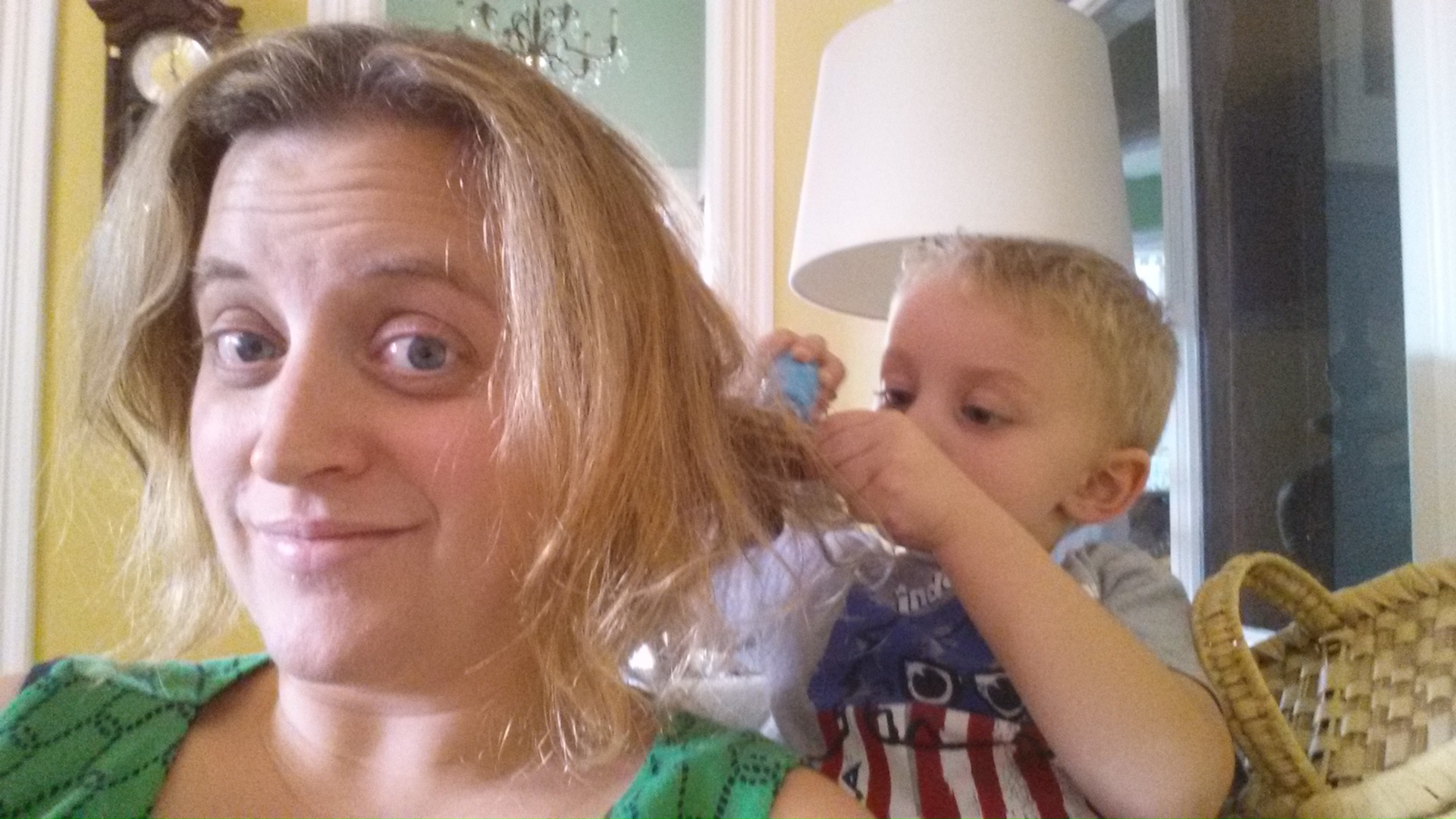
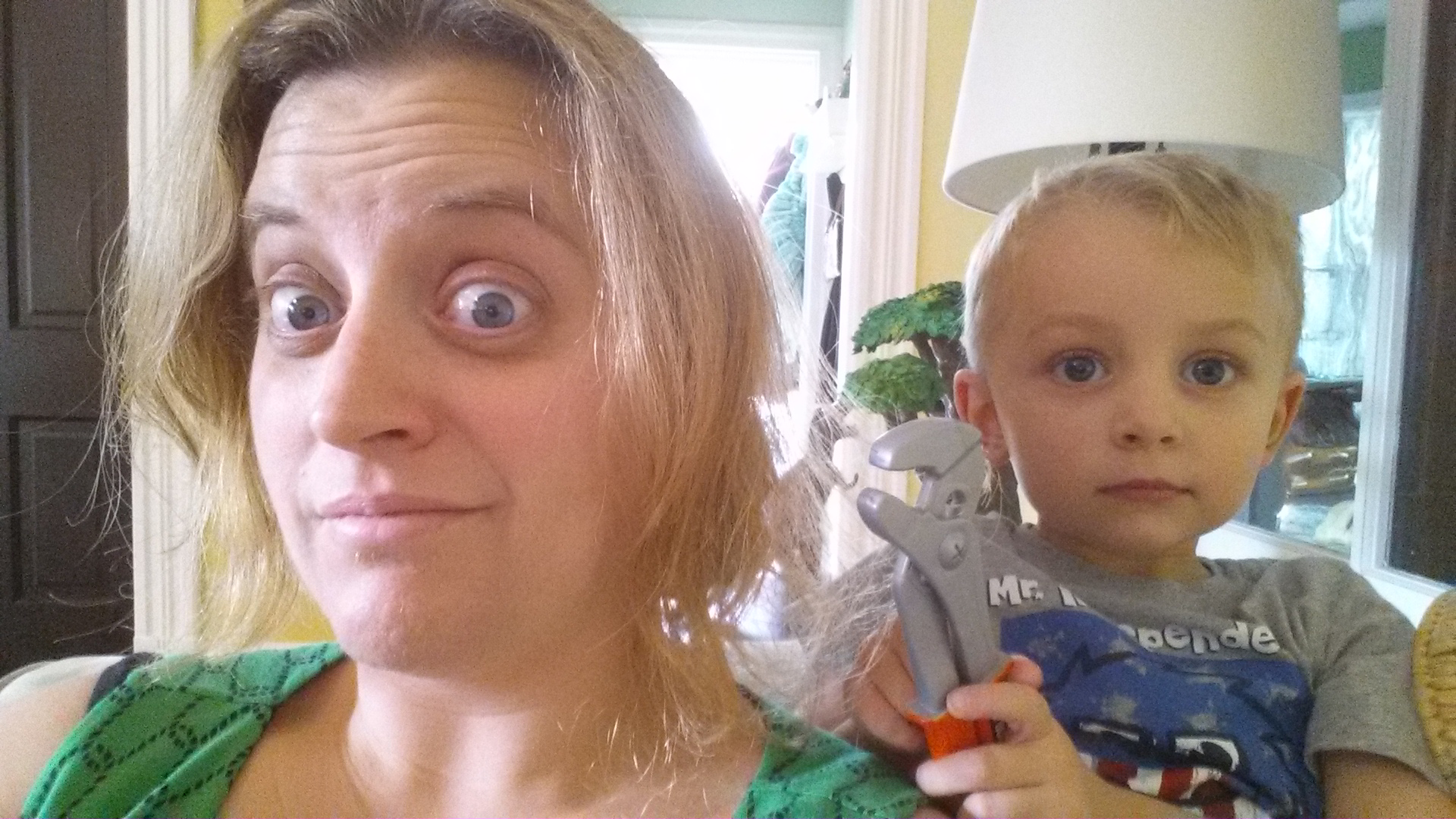
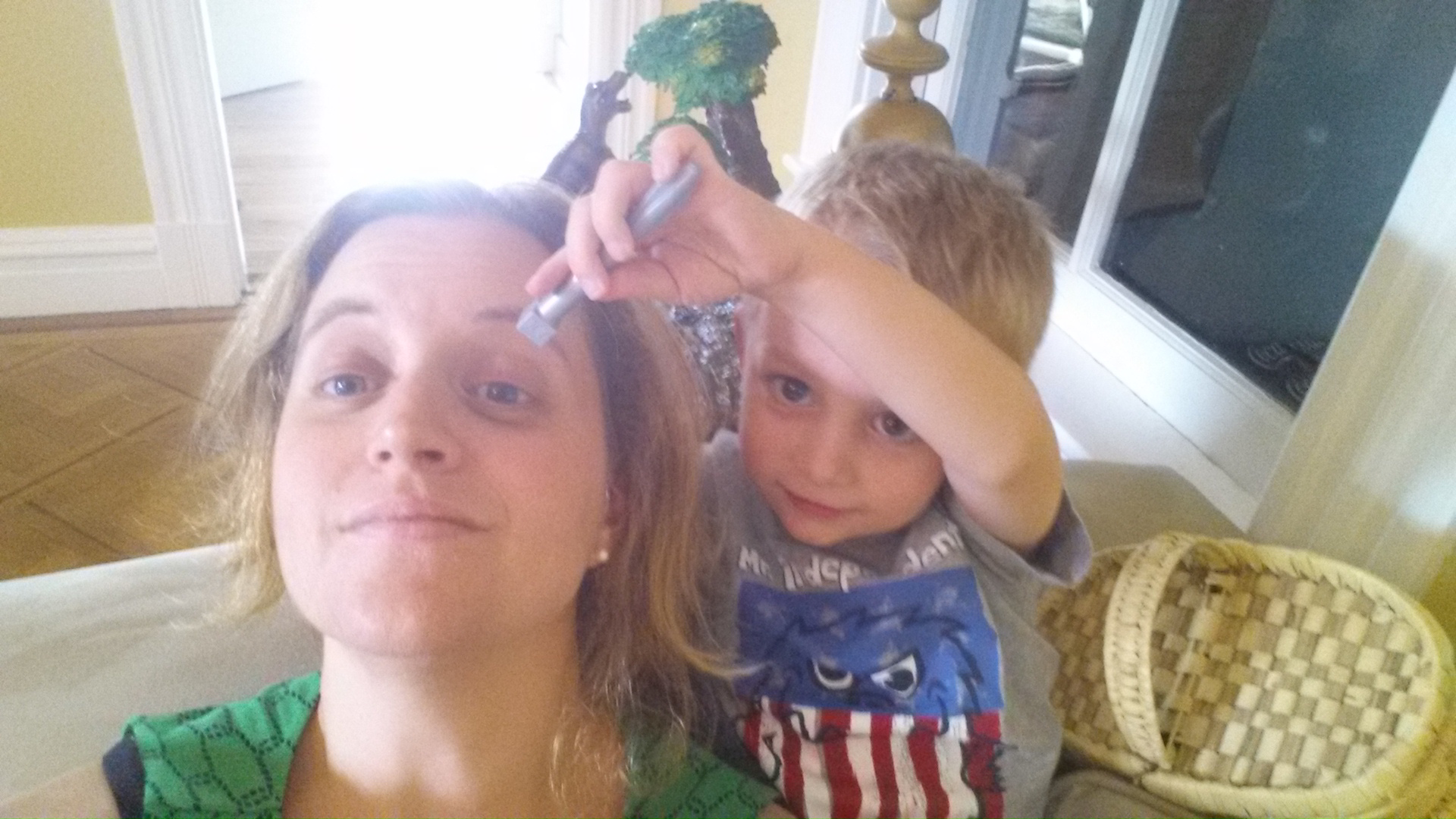
Though my morning sickness is tapering off a bit, it still won’t let go entirely. Which is mostly annoying, but once in a while makes for some {funny} when it has the effect of keeping me on the sofa. Because sometimes when I sit on the sofa, my boys decide to do my hair. With tools.

These Walls - PHFR19 - 8

These Walls - PHFR19 - 9

These Walls - PHFR19 - 10

These Walls - PHFR19 - 11

These Walls - PHFR19 - 12

These Walls - PHFR19 - 13

{real}

I’m kind of cheating here – I grabbed this pic out of my files from a couple of years ago and doctored it up to fit the following {real} thing around here this week:

FLOP

These Walls - PHFR19 - 14

Yep, my “7 Posts in 7 Days” was a flop. Sigh. Why do I do these things to myself? There was no way I was up to publishing a post every day this week. No way, no how.

Morning sickness is still hanging on. Baby hasn’t been sleeping well. We’ve had commitments. Brennan’s been completely occupied with the roof. Boys have been bickering. I keep walking into the kitchen to find the baby on the table. Then I turn around to find him back up there.

These Walls - PHFR19 - 15

But I’m going to take Heather’s advice and try to KEEP GOING. I’ve blogged more in the past couple of weeks than I have in months. I have another post partially-drafted on paper and more in the beginning stages in my head. I have some wind behind my sails. So forget the 7 in 7, right? I’m going to KEEP GOING.

These Walls - PHFR19 - 16

Thanks for joining me, all! Be sure to head over to Like Mother, Like Daughter for more {pretty, happy, funny, real}!

Seeking Home

Laura Kelly Fanucci recently wrote a beautiful post on the concept of going home and the question of where home is: Is it where you were raised? Where you hang your hat? Is it, ultimately, where you hope to rest when your days are done?

Right now I am home.

Sitting in the house that we own. Where we are raising our children. Where mail arrives daily bearing my name. Where we welcome family and entertain friends. Where I pull weeds and paint walls. Where my car pulls into the driveway and my shoes slip off in the doorway.

And I am writing about going home. Which is not here.

(Go to Laura’s blog, Mothering Spirit, for reliably beautiful writing. Every time I stop there, I feel as if I’m opening a book of poetry.)

I’ve given a lot of thought to the concept of home.

There is, of course, the home in which I was raised. My parents moved away from it a couple of years after I graduated from college. The change was hard for me to take and I was kind of bratty about it: Once when my mother asked whether I’d be coming home (to their new house) for the weekend, I sniffed that I’d be going to visit my parents – not home.

Home is where the parents are, Mom retorted.

During my single twenties I referred to a series of apartments as “home,” though none of them felt like it. Even my first house with my husband didn’t feel much like home: He’d bought it long before we met and it was nothing like what I would have chosen.

When we moved into this house a few years ago, I knew that it was our real, solid opportunity to build something that would be a home to our family for years to come – possibly for the rest of our lives. So surely there should have been a light switch or something – a switch that would flip on the feeling of home? Right?

This house contains our things and ourselves and our goals and even our dust, but I think it will take some years before it truly feels like home to me. More than ten years after my parents moved, it’s still our old house on Paradise Road that creeps its way into my dreams.

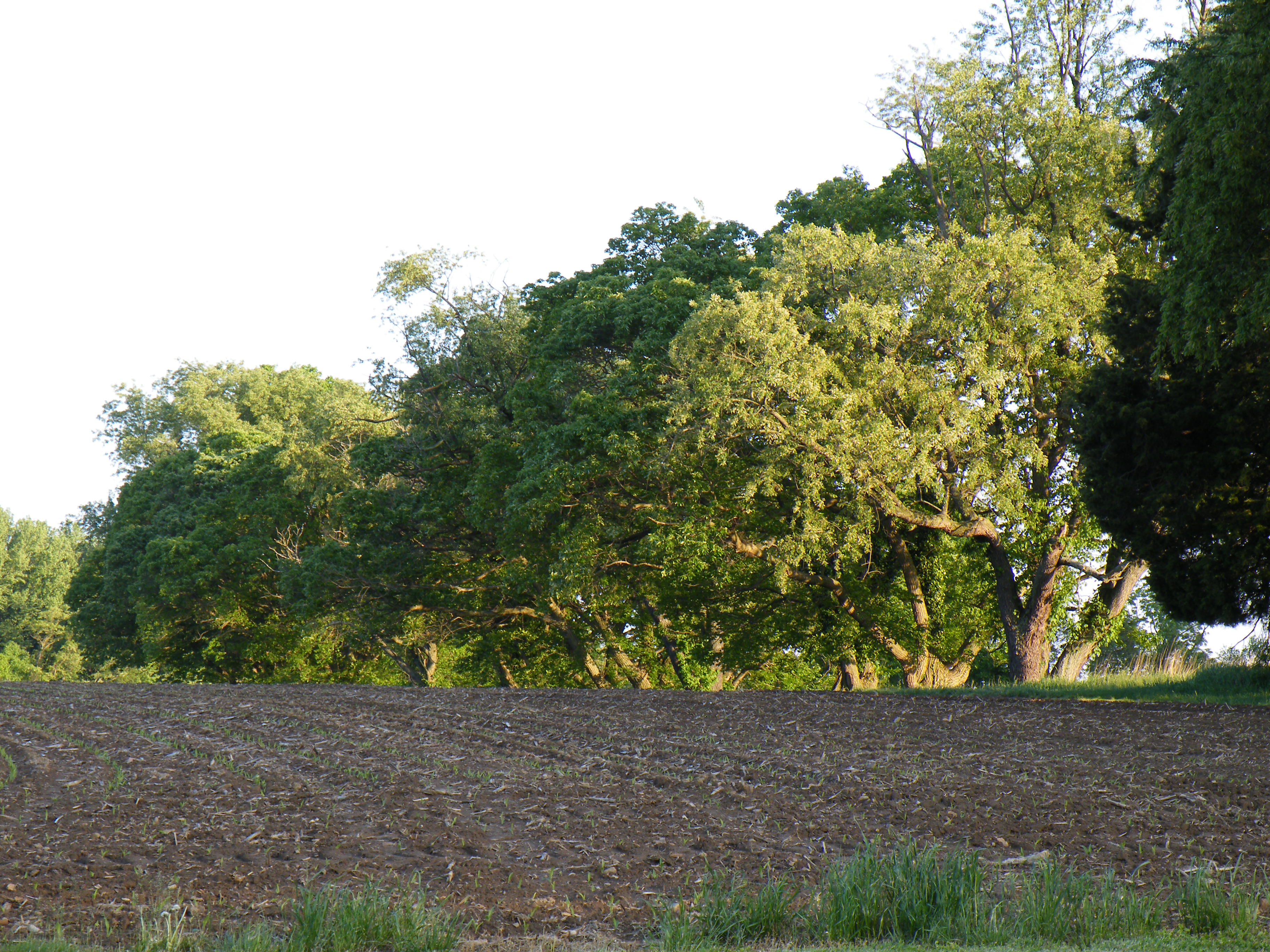
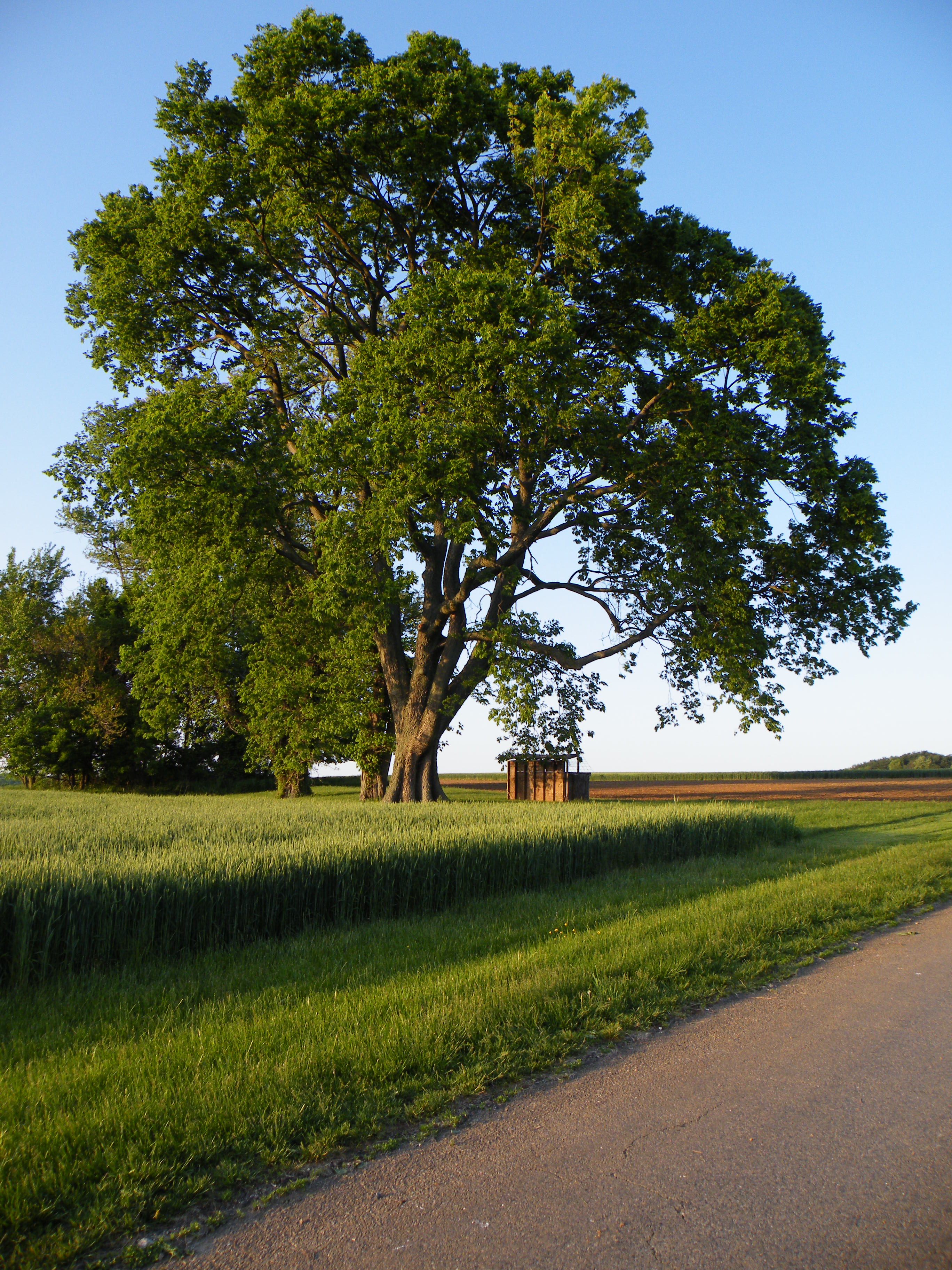
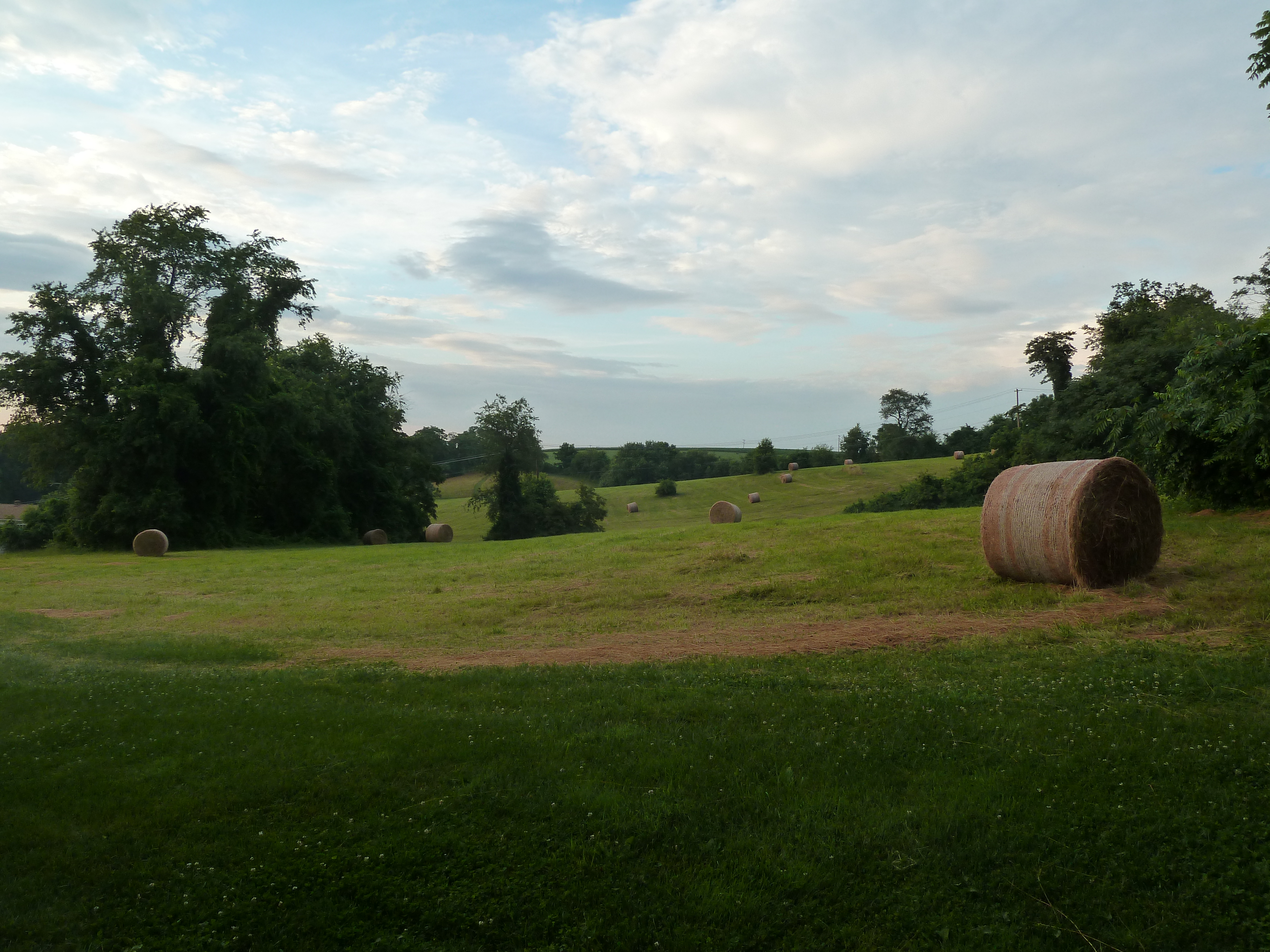
But through all my years – even those before Paradise Road – there’s been another place that feels most like home. It’s at once vague and particular. In the broadest sense, it’s Maryland. The Maryland of rolling hills and gauzy landscapes, of roadsides bordered with trees so draped with vines they seem like jungle, of farms that look a little rough around the edges, messy from long grass and wildflowers.

I crest a hill and catch my breath at glimpses of that Maryland – my version of it, which leaves off the urban and the flat and even the mountainous. For that’s the one that means home to me.

These Walls - Seeking Home - 1

These Walls - Seeking Home - 2

These Walls - Seeking Home - 3

These Walls - Seeking Home - 4

More particularly, that version of home is embodied in my grandparents’ place. It used to fit the bill perfectly: a farm with a stream and clumps of forest and an overgrown back field, a barn that smelled dusty and sweet – hay sweet, old manure sweet. But since the end of my college days, this place, too, has become removed from that golden image of home. My grandparents are still there, but the farm has been developed. We enjoy the most important elements of that home – family and love and time spent together – but the fields are gone, the barn is gone, the cattle are gone, and so the feeling is different.

A couple of weeks ago, I drove up to what we still call “The Farm” via a road I don’t usually take. At first it felt so familiar, so like what I knew growing up. But as I neared that home, the one most dear to me, I saw trees growing where cattle once grazed. I saw my grandparents’ fields dotted with huge houses plopped here and there, spiting the natural curve of the land. I saw nearby hills marked not by tree lines, but by rooftops.

I sighed. It’s so hard to seek a home that can no longer be found.

There was a time when my sigh would have turned into a grumble, a growl of resentment. But just as this place has grown up, so have I. The new roads and traffic lights and neighborhoods and shopping centers may signal a loss to me, but to many others, they signal promise.

So it goes. Things change. Places change. People change.

It’s better to focus on the family and the love and the time spent together. And to accept that maybe promise is spread around to more than the newcomers – that maybe my future depends more on the new people than on the old fields.

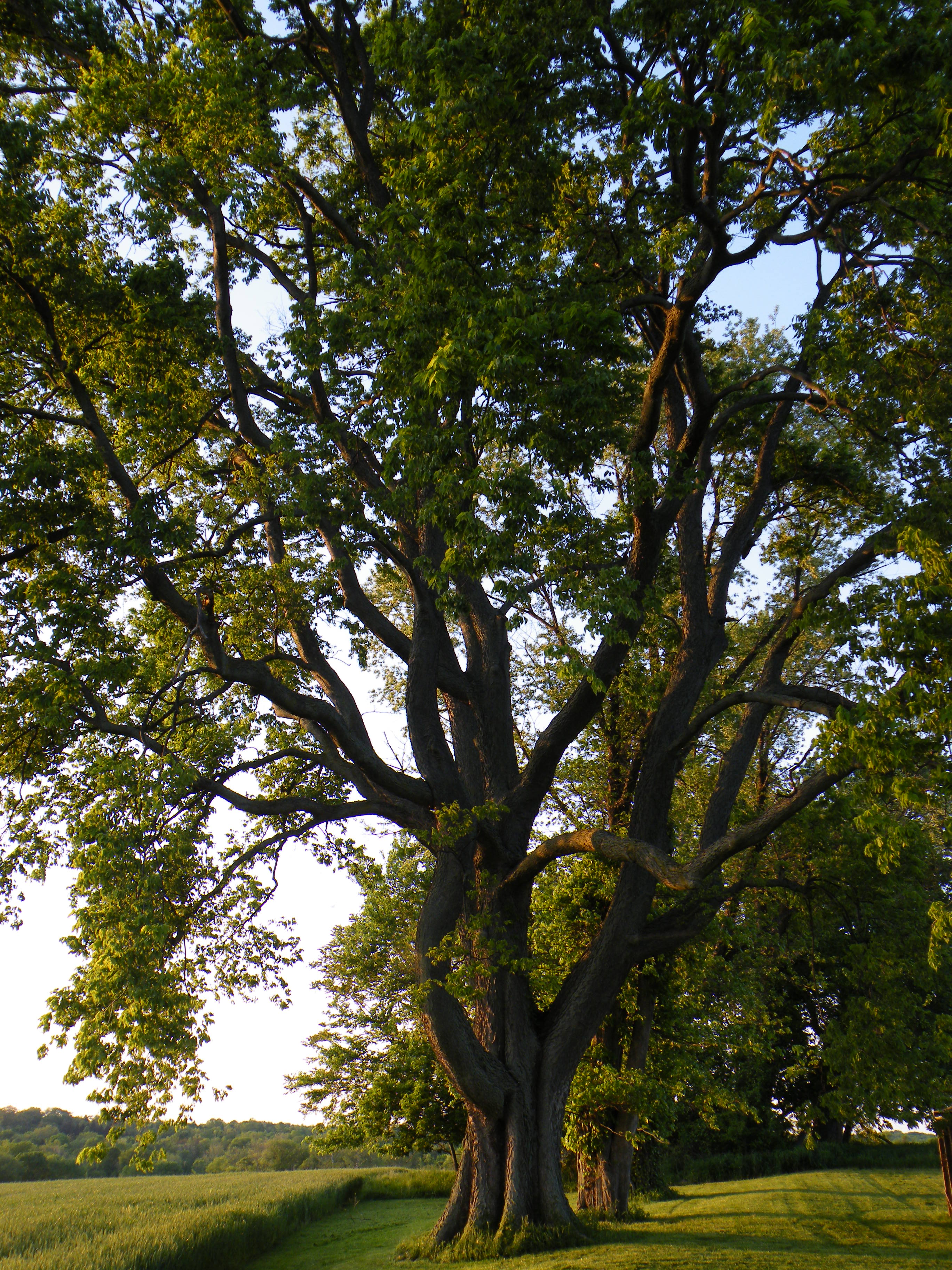
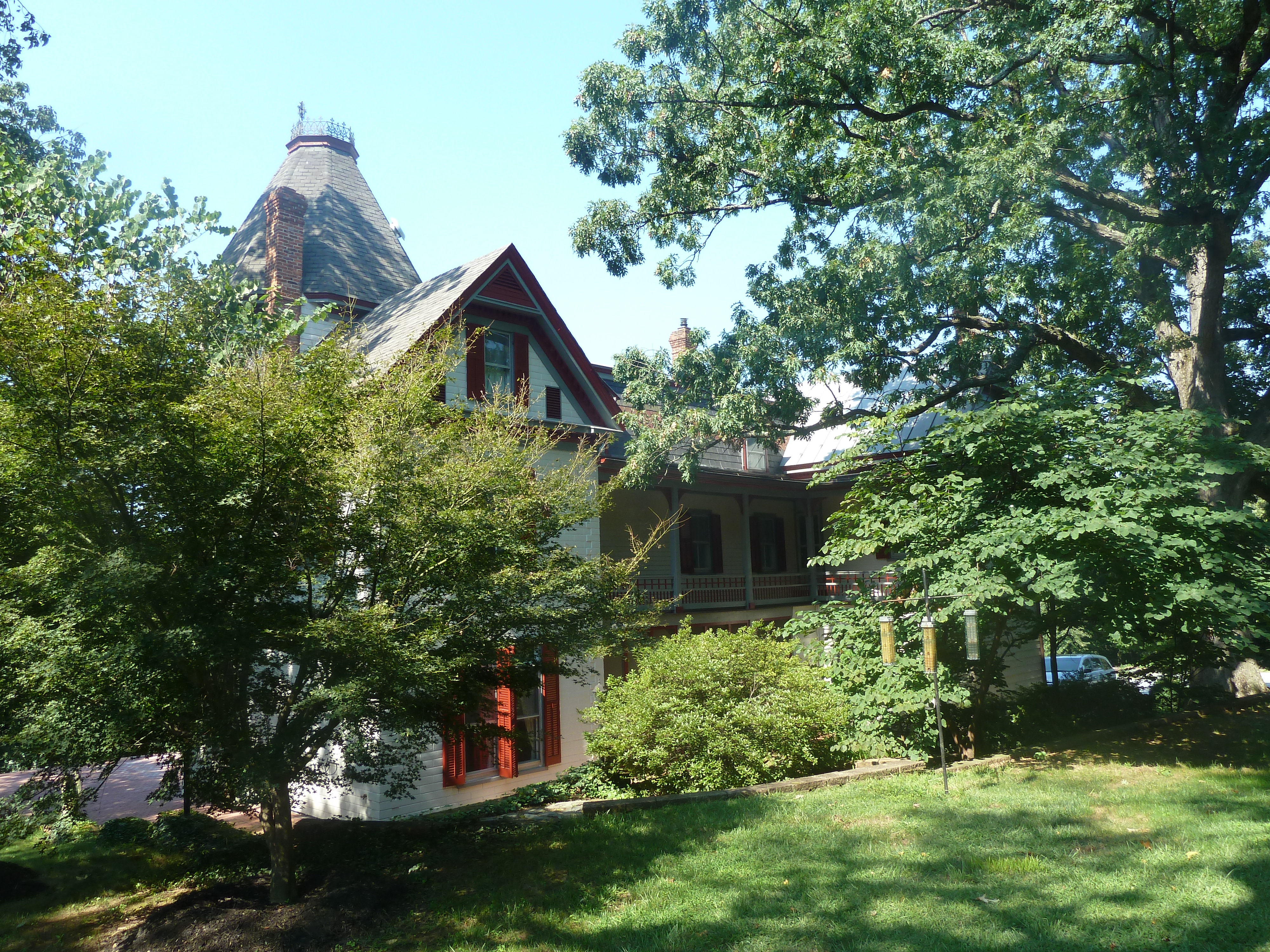
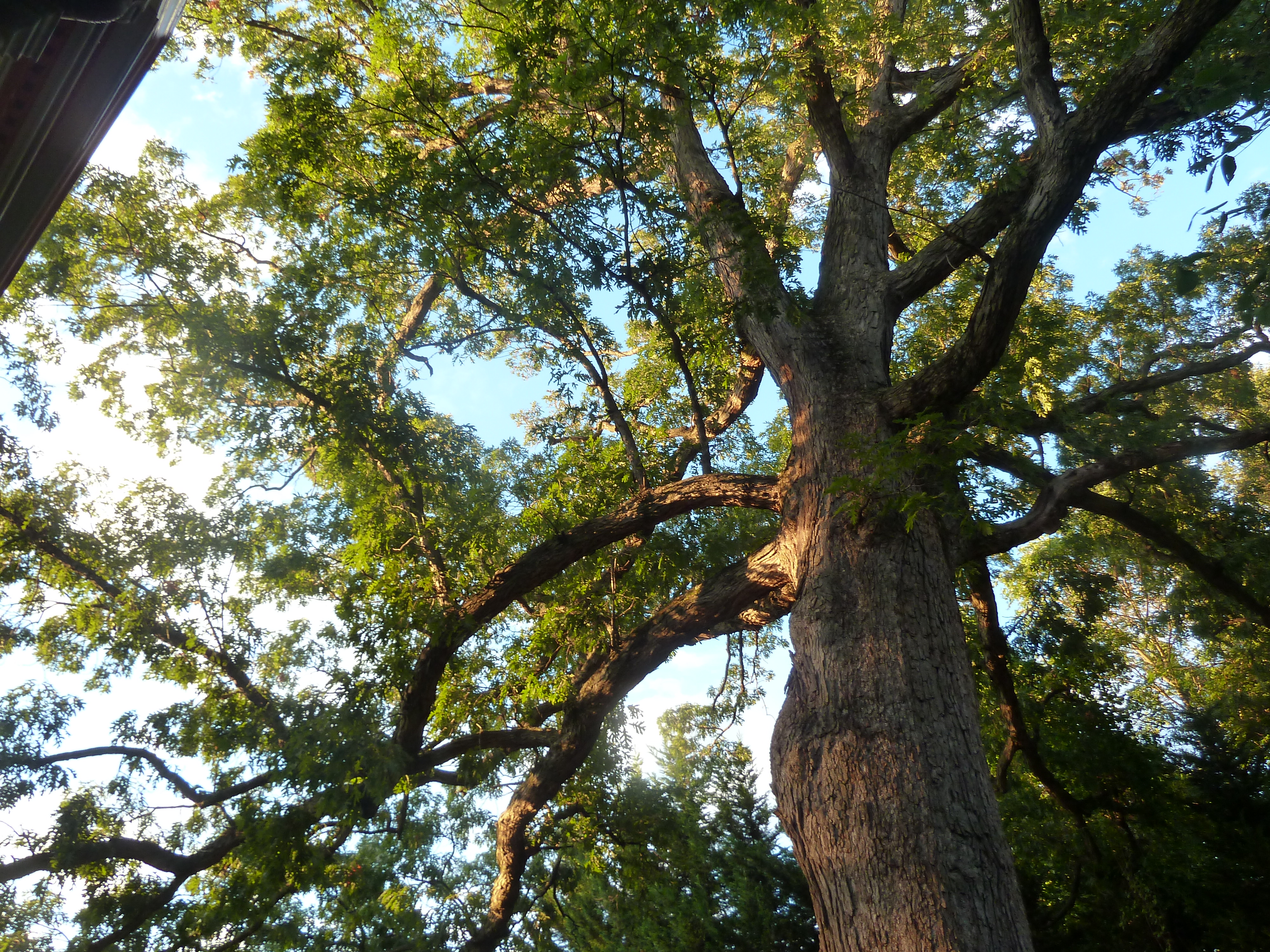
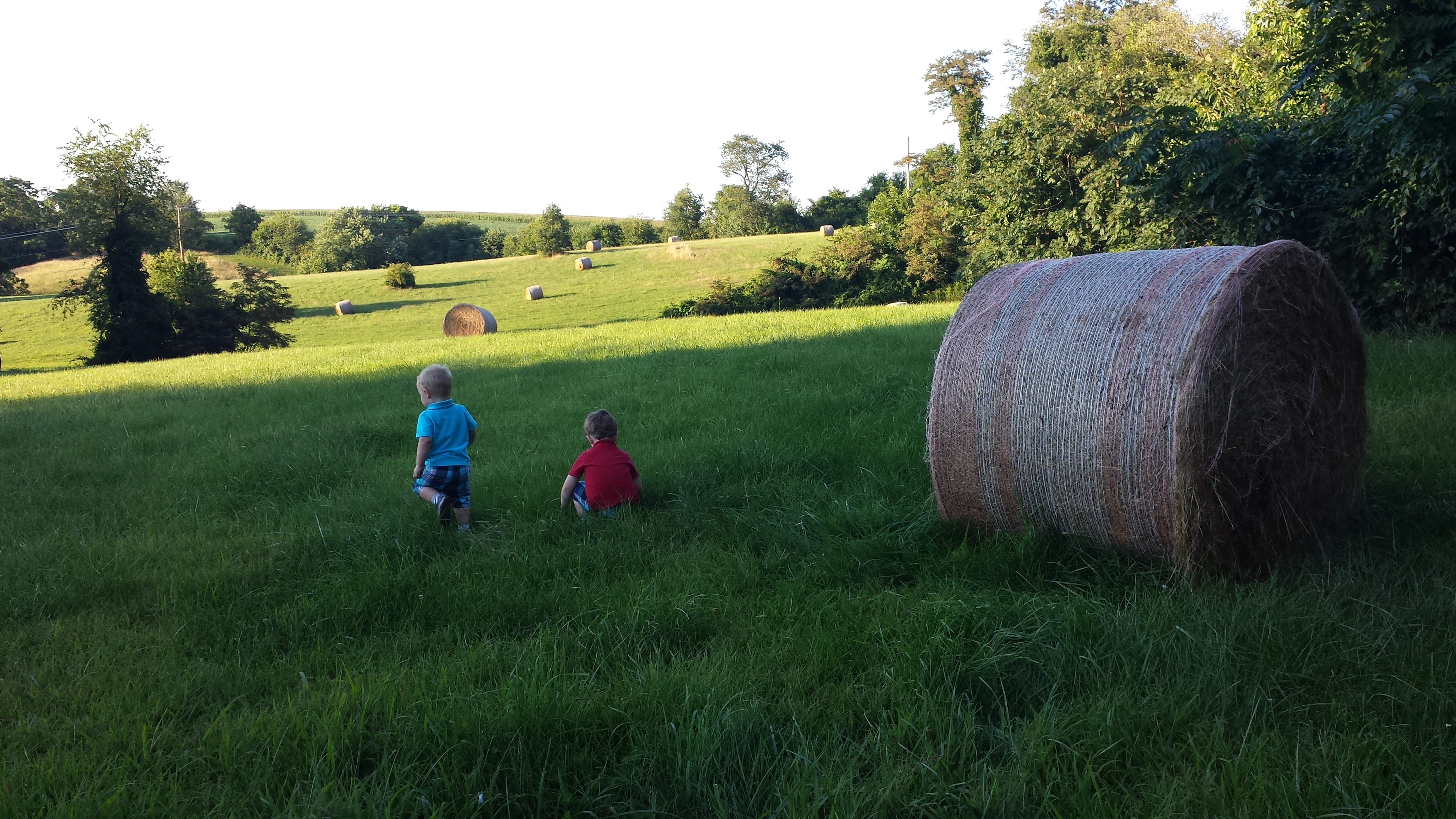
I return home – to this home, the home of my husband and our boys and our dust. It’s a beautiful place. It’s full of the tradition and detail and imperfection and aged wood I long for. It’s sheltered by one of the loveliest old trees I’ve seen and it’s bordered by fields that remind me of those I used to gaze at through my bedroom window, chin propped on my arms in the dark, putting off sleep a little longer.

These Walls - Seeking Home - 5

These Walls - Seeking Home - 6

These Walls - Seeking Home - 8

These Walls - Seeking Home - 9

These Walls - Seeking Home - 7

These Walls - Seeking Home - 11

I suppose I’ll know my feeling of home has caught up with reality when I dream of an 1860’s Victorian rather than a 1970’s rancher. Or maybe when I return from a trip and catch my breath as I mount our long driveway. Or perhaps it will be when I approach my grandparents’ neighborhood and forget to think of it as a farm.

Until then, I’m just so grateful to be here in this beautiful place, where I’ll surely someday find my home.

These Walls - Seeking Home - 12

7 Quick Takes Friday (Vol. 34): He’s Not Afraid to Climb the Roof, But I’m Afraid to Ride a Bike

Seven Quick Takes Friday

—1—

Wait, what did I say about posting every day this week? Because yesterday came and went, and as far as I know, I didn’t post a thing. (Shhh…)

For those of you visiting from 7QT, here are links to Monday’s (late) 7QT post, Tuesday’s post on a man who saved 669 children from Czechoslovakia on the eve of WWII, and Wednesday’s post on my 12-week sono and thoughts about mothering all boys.

There’s more to come – I promise.

—2—

If there’s one subject that I’ll spend hours writing on and still not get it right enough to publish, it’s racism. That was my problem yesterday, and it’s been my problem many times before. Can’t… quite… get… up… the… nerve!

—3—

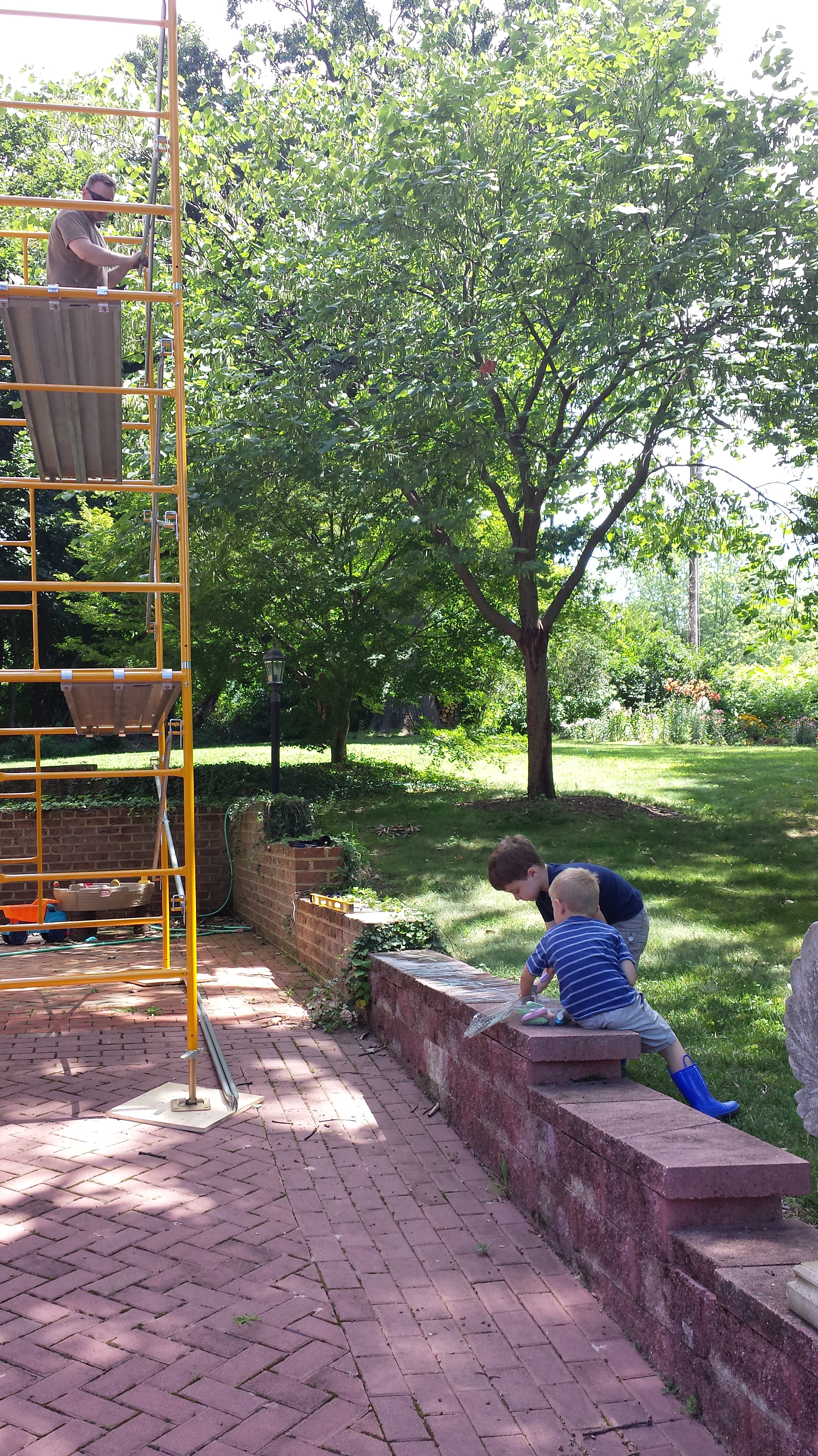
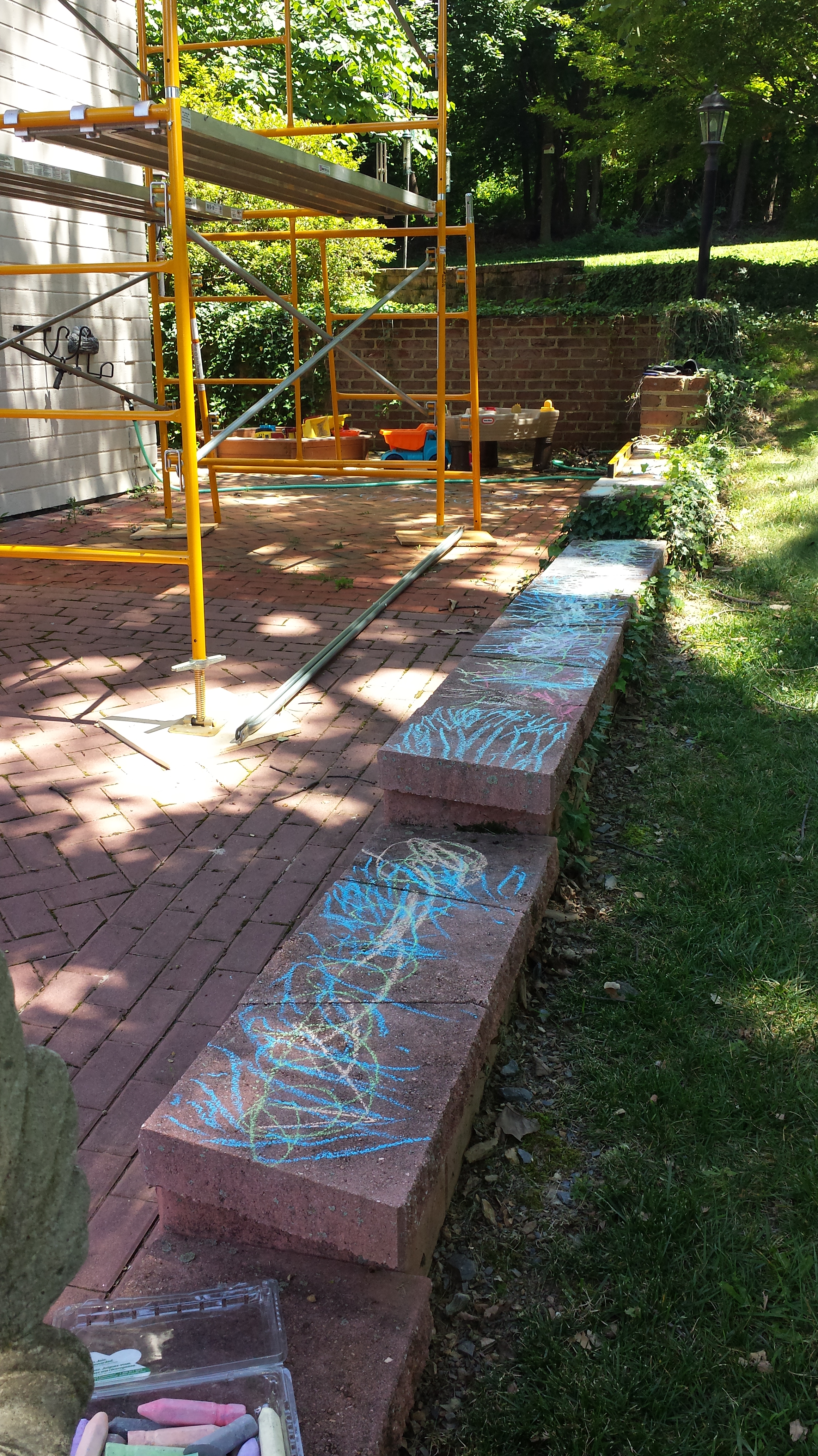
After a kind of foggy/dreamy Wednesday because I was living inside my head, trying (to no avail) to get that racism post right, I took a break yesterday. The weather was absolutely gorgeous and Brennan had taken off work to tackle a project (see below), so we all spent more time outside than usual. I made a stab at weeding the jungle behind our house, the baby sat in his stroller (poor guy – I don’t trust him to roam free), the boys busied themselves with sidewalk chalk and sand, and Brennan went about his work…

—4—

… which kind of terrifies me.

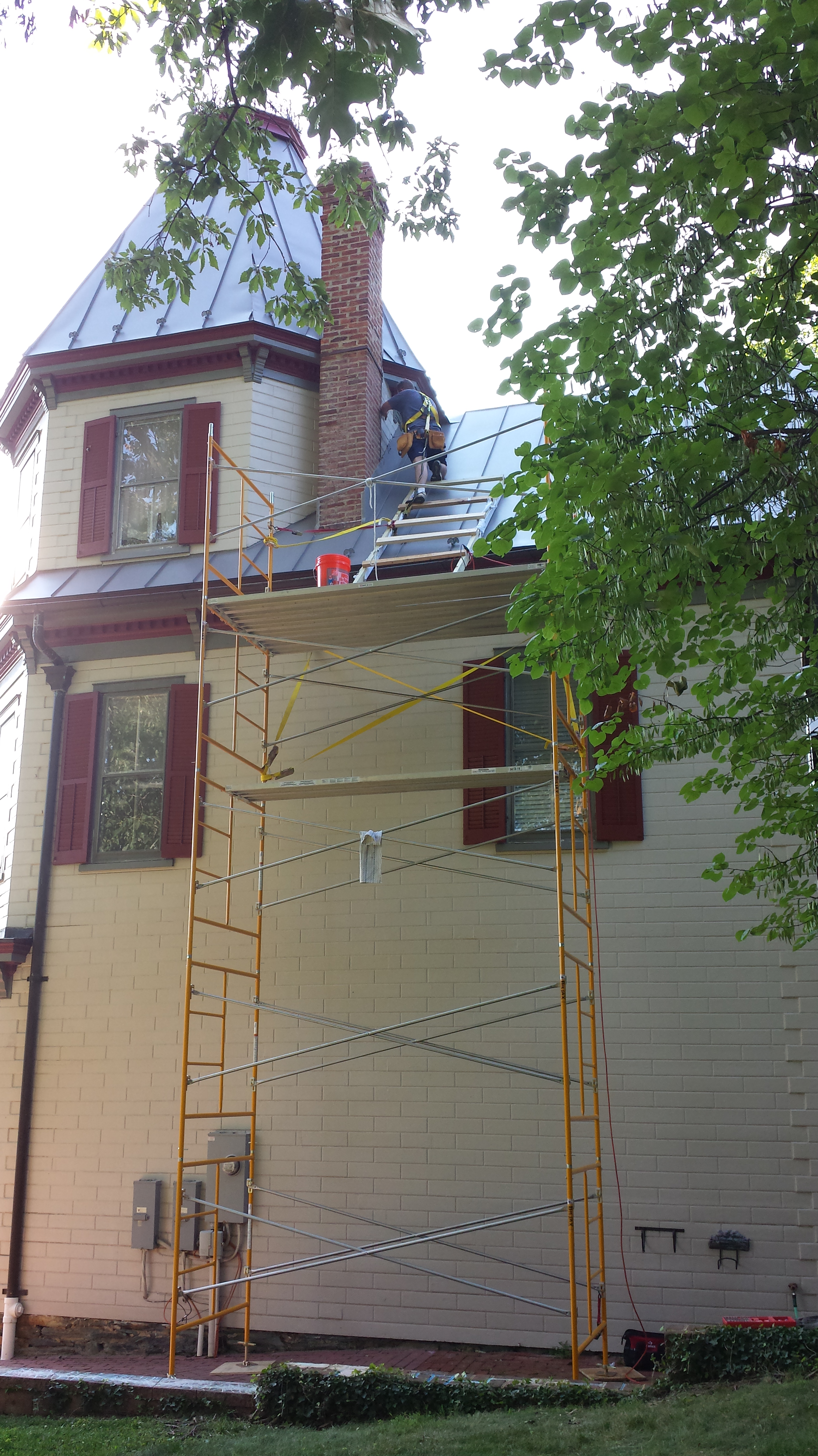
These Walls - 7QT34 - 1

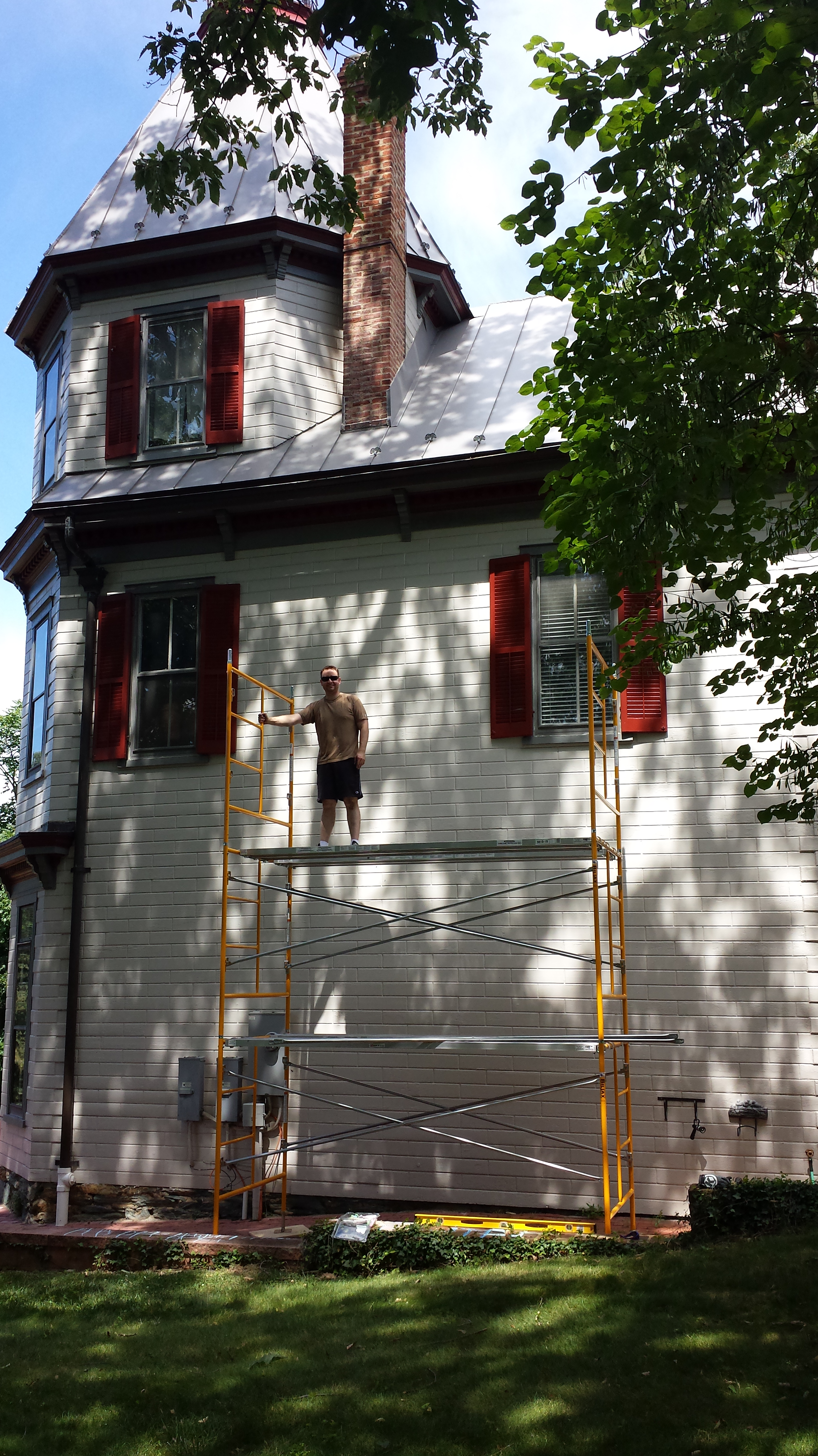
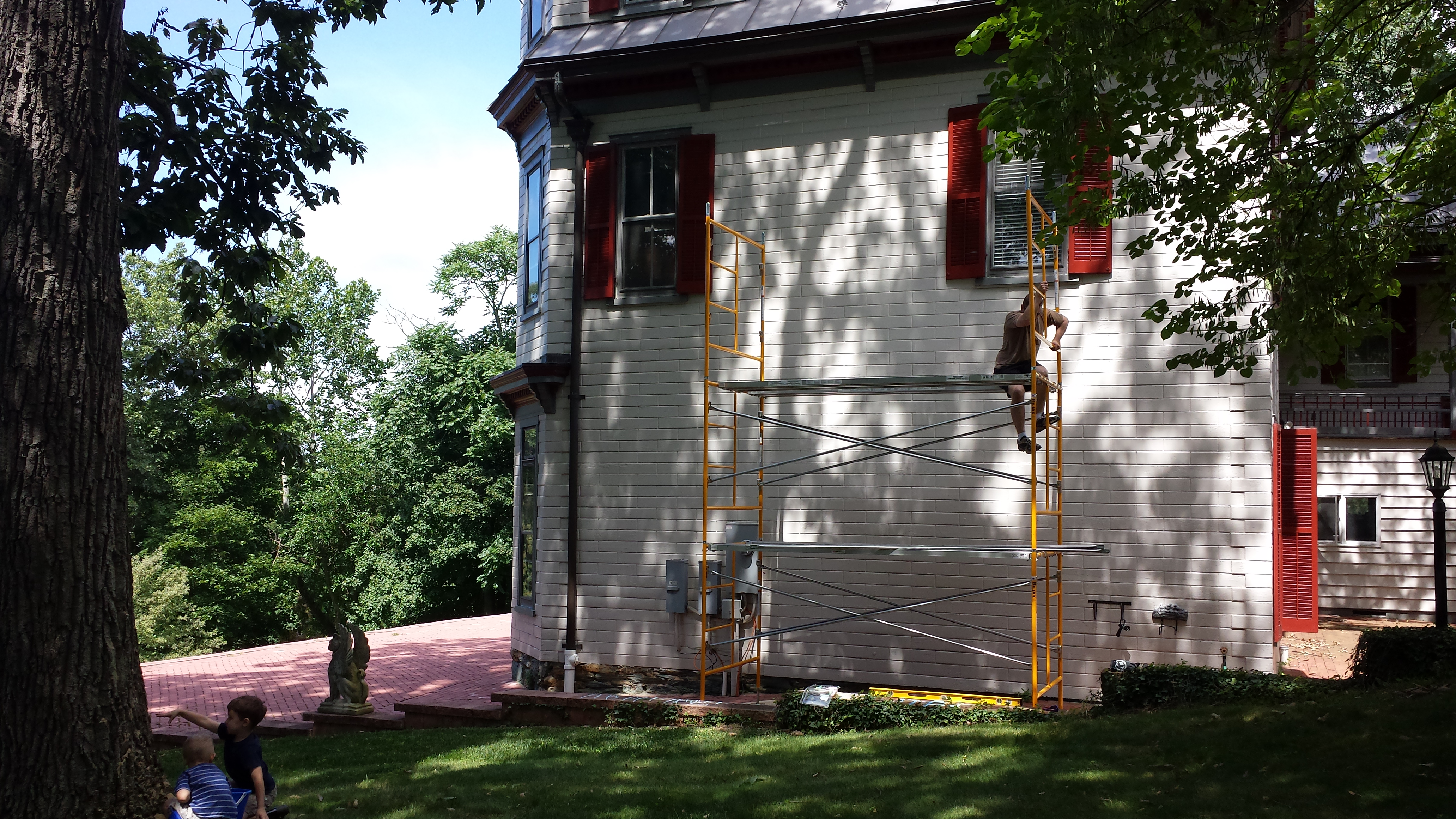
Do you see the chimney at the top of that photo? Well, there are some pieces of (wooden) siding just next to it that are rotting because there used to be a leak in the roof. We had the roof replaced a couple of years ago (THAT was a PROJECT), so the leak is no longer an issue, but the rotted siding still needs to be replaced. (Or at least that’s how I understand the situation.)

Anyway, Brennan is a worker-bee kind of a guy who would rather do just about any home-repair job himself rather than pay someone else to do it. So here we are. He bought scaffolding (which he plans to use in the future to paint the entire exterior of the house), a harness and other safety equipment (thank goodness), and replacement siding, etc.

Now he’s off to the races. Yesterday he erected the scaffolding and secured it to the house. I believe today he’ll be building some sort of a platform to reach the roof. Then, hopefully, he’ll be able to complete the actual siding work.

Please pray that he does it all safely!

—5—

As I said above, we all – including both boys – spent more time outside yesterday than usual. For one child, “more than usual” ended up being a couple of hours, maybe. For the other – my lover of the great outdoors, his Daddy’s helper and shadow – “more” meant all day. It was so sweet to see: He followed Brennan back and forth between the house and the garage, he helped me weed the garden, he drew “storms” all over the brick patio, he played in the grass next to the scaffolding while Brennan worked to build it, and he even ate his lunch on a picnic blanket with a perfect view of the thing.

I love that child.

These Walls - 7QT34 - 2

These Walls - 7QT34 - 3

These Walls - 7QT34 - 4

—6—

Since I’ve got a whole “link to an article and write some commentary on it” thing going this week, I thought I ought to include at least one such piece in this 7QT. A light one, with a little personal story rather than commentary. So here’s a Wall Street Journal article on adults who never learned how to ride a bike.

Alas, I fit into this category.

In my case it wasn’t the whole “kids don’t spend much time outside anymore because of cable and videogames” thing – I spent plenty of time outside. It’s just that my outdoors time was mostly spent loading my favorite possessions into a little red wagon, trekking through the neighbor’s yard as if across the prairies, and then building forts behind his forsythia bush.

For me, it was that we lived on a pretty busy rural road, so we didn’t have a ready-made place to practice. And I needed ready-made, because I was a huge wimp about it. My brother grew up in the same house and on the same road I did, obviously, but once our dad had taught him the basics in the back yard, he took off with it. Soon enough, Eric was riding through the yards and the little streets behind our house. Later, he got into triathlons and long-distance cycling.

(Yes, he and I are very different.) When our dad taught me the basics of bicycle riding in the backyard, that’s where I stayed. To this day, I can make a bike go, but I can’t safely make it turn or stop. If I’m lucky, I’ll do a continuous loop of big, wide circles in the grass.

But really, I can only think of one time in my life when my inability to ride a bike was anything near problematic. And that would be on the campus of Stanford University in the fall of 2000. My senior year of college, I was dating a guy who had just started a master’s program at Stanford. I flew out to visit him a couple of times (which felt like a BIG DEAL) and found, to my dismay, that riding bikes around campus was the thing. My boyfriend had borrowed a bike for me to use, and he clearly intended for us to spend much of the weekend seeing the sights on two wheels.

“But I don’t know how to ride a bike.”

“What do you mean, you ‘don’t know how to ride a bike?’”

“I mean, I don’t know how to ride a bike. I never really learned. I can make one go, but that’s it – I don’t know how to control it.”

He was flummoxed and incredulous and determined that we were going to ride bikes anyway. (Clue #47 that he was not the right guy for me.) So I got on that bike and white-knuckled it across campus. I honestly don’t know how I made it. I know I was terrified, especially whenever we were near roads. I also know I was shaky and wobbly and just about at the end of my rope. On the return from our lunch (or whatever kind of outing it was), my luck ran out: I first ran into a (parked) car, throwing the bike out of the way to avoid damaging the vehicle. A few minutes later, I ran full-on into a bush. At that point, I snapped.

I do not know how to ride a bike. I will not do something I am uncomfortable with.” (Death stare in his direction. Clue #48.)

Fun fact: Just before I was due to fly out to Stanford the second time, the boyfriend dumped me. As I had already purchased the ticket (and had very little money at the time), I informed him that I would still be coming. One night I prepared he and his roommates a delicious home-made dinner that caused the roommates to gush that I was a princess and that the (ex)boyfriend should marry me at once. 😉 The other night, I made him take me out to an expensive dinner. It was overlooking the Pacific and incredibly elegant and I ordered whatever. I. wanted.

—7—

Back to my life in the here and now. (And can I just tell you, when I think back on that boyfriend, how very, very grateful I am to have ended up with Brennan?)

I forgot to include sono pictures in Wednesday’s post! So here’s our little cutie #4:

These Walls - 7QT34 - 5

These Walls - 7QT34 - 6

Have a very happy weekend, everyone! Don’t forget to stop over to Kelly’s to check out all the rest of the Quick Takes!

These Walls - 7QT34 - 7